B2B evidence guide
Recycled content claims evidence: check the chain before publishing
A defensible claim connects exact public wording to product composition, the selected material, supply-chain records, certificate scope when relevant, the production SKU and the final labels or campaign copy.
Direct answer
Do not approve a recycled-content claim from a product title, category name or certificate image alone. Check the exact claim, fiber composition and percentage, supply-chain links, certificate holder and scope, validity, transaction or material coverage, SKU connection and final customer-facing copy.
01 / Claim definition
Write the exact recycled-content claim first
A review cannot begin with the word sustainable. Record the precise statement intended for the product page, quotation, sewn label, hangtag, packaging or campaign. State the recycled fiber, percentage if claimed and the exact garment or SKU to which the words will apply.
Keep recycled, organic, bamboo and general environmental wording separate. The guide to clothes made from recycled material explains how those material directions affect the underlying garment brief before this evidence review begins.
02 / Product record
Match fiber composition and percentage to the product specification
The product-level composition record should identify every fiber and its percentage for the selected material. It should also connect to the garment specification used for sampling and production. Do not carry a percentage from one model into another product in the same collection.
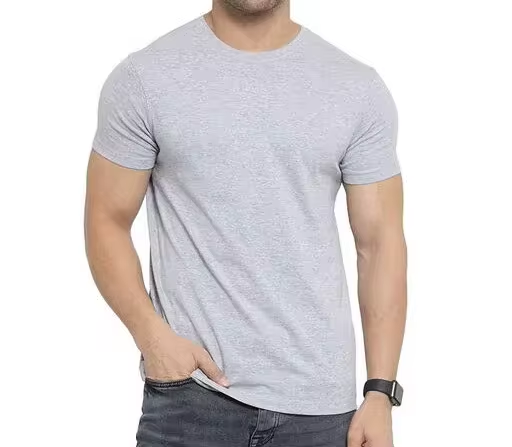
For example, the supplier title for the 60/40 recycled cotton blend T-shirt states 60% recycled cotton and 40% polyester. That source wording helps identify the intended record, but the production material and order documents still need to support the public claim.
03 / Supply-chain connection
Connect supplier declarations and transaction records to the SKU
The evidence package should show how the selected material moves through the relevant supplier and order path. The required record names depend on the claim and procurement process, but every link should answer the same question: does this document connect the supported material to this production product?
| Evidence layer | What it should identify | Failure signal |
|---|---|---|
| Product specification | SKU, garment, material and exact composition | Generic range wording only |
| Supplier declaration | Material identity, supplier and applicable scope | No connection to the selected material |
| Transaction record | Relevant parties, material or order and date | Unrelated product or expired chain |
| Production approval | Approved sample, labels, packaging and order reference | Copy approved separately from the SKU |
Apply the same chain to the organic cotton and recycled polyester pullover hoodie and the recycled polyester hooded outdoor jacket. Similar source wording does not make their product records interchangeable.
04 / Certificate review
Check the certificate holder, scope, validity and SKU coverage
A certificate is relevant only when its holder and scope fit the operation, material and claim being reviewed. Confirm validity and identify how the selected material or transaction connects to the certified scope. A certificate name in a supplier category does not establish product-level coverage.
Holder
Does the named organization match the relevant supplier or operation?
Scope
Does the scope cover the material, process and claim under review?
Validity
Was the document valid for the relevant material and transaction period?
Connection
Can the selected production SKU be linked to the covered material or transaction?
05 / Publication set
Review sample labels, packaging and campaign copy together
The physical sample can show garment construction, fit, color, decoration and label placement. The evidence package supports composition and claim wording. Review both at the same approval point so product copy does not drift away from the material actually selected.
The recycled apparel corporate and brand program guide is useful when artwork, hangtags, packaging and campaign language must be coordinated across a team, event or retail order. The organic bamboo cotton long-sleeve T-shirt also shows why plant-fiber title wording should not be converted into a recycled-content statement.
06 / Stop conditions
Keep the claim unpublished when the evidence chain is incomplete
| Missing or conflicting item | Safe next step |
|---|---|
| Composition or percentage | Use neutral material wording until the product record is confirmed |
| Supplier or transaction link | Request the missing connection before approving the claim |
| Certificate holder, scope or validity | Do not publish certification wording for the product |
| SKU or order connection | Keep the claim off labels, packaging and campaign copy |
| Copy exceeds the evidence | Narrow the statement to the supported fact or remove it |
An unsupported environmental benefit, reduction figure or range-wide certification statement should remain unpublished. Neutral, product-specific wording is better than a broad claim that cannot be traced to the selected material and SKU.
Buyer FAQ
Questions before releasing recycled-content copy
What is the first document to request for a recycled-content claim?+−
Start with the product-level composition or specification record for the selected material and SKU. It defines the exact fiber wording and percentage that the rest of the evidence must support.
Does a valid certificate automatically cover every product from a supplier?+−
No. Check the certificate holder, scope, validity and the connection between the certified operation, selected material, transaction and exact SKU.
Should labels and campaign copy be reviewed before production?+−
Yes. Review product labels, hangtags, packaging and campaign wording with the sample and evidence package so the final public claim does not exceed the supported scope.
What should happen when the evidence chain is incomplete?+−
Keep the unsupported claim unpublished. Use neutral product wording until the missing composition, transaction, certificate or SKU connection is confirmed.
Build the evidence set
Start with the garment brief, then review the public claim
Keep the material specification and evidence review as connected stages, while preserving model-level boundaries.
Specification guide
Specify clothes made from recycled material
Define fiber wording, blend percentage, fabric, garment, branding and approval requirements.
Product family
Review current material-led apparel models
Compare five real sourcing references without extending one model's claim to the collection.
Review before publication
Bring the product, documents and proposed copy into one review
Share the selected SKU, composition, material records, certificate or transaction documents and the exact wording planned for labels, packaging and campaigns. Use the recycled cotton versus recycled polyester comparison to define the material brief before checking the claim.