JST-BW202202127
300D high-stretch Oxford shell
A submitted winter-garment shell sample was tested against basic safety, garment, hydrostatic-pressure and moisture-vapour standards.

Manufacturing
Pertemba directly operates production sites in Huizhou and Hunan, with approximately 3,000 m² across finishing, packing and warehouse operations. Product routes and commercial terms are confirmed for each project.
Approximately 1,000 m² for finishing and packing and 2,000 m² for warehouse operations.
Across directly operated Huizhou and Hunan production sites.
Supporting product preparation, garment production, finishing and handling.
Maximum reference by product type; actual availability depends on construction, materials and scheduling.
Production floor views
These supplied photographs provide visual context for the directly operated working environments. The confirmed scale figures above come from company confirmation rather than being inferred from any single image.

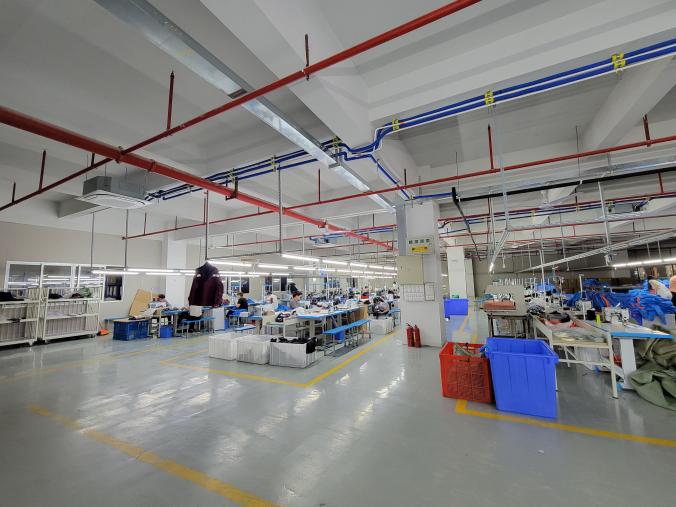
Worktables, equipment and marked floor lanes provide a broader view of the production setting.
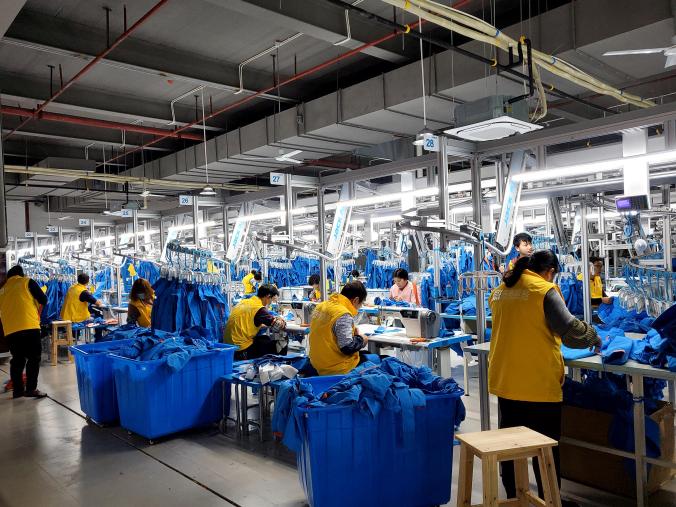
Operators and blue workwear show an active garment-assembly environment in the supplied material.
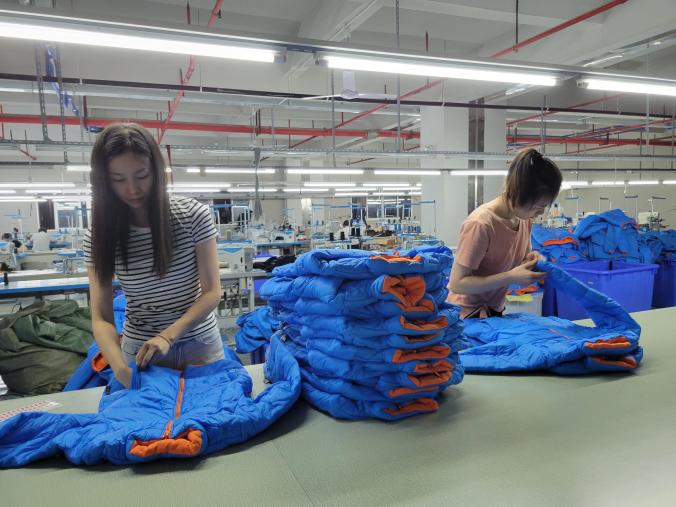
A closer view of workers sorting and arranging garments adds human-scale production context.
Inside the visible flow
The sequence below is a practical way to review the supplied photographs. It does not imply that every product follows one identical route or that every pictured area applies to the selected model.
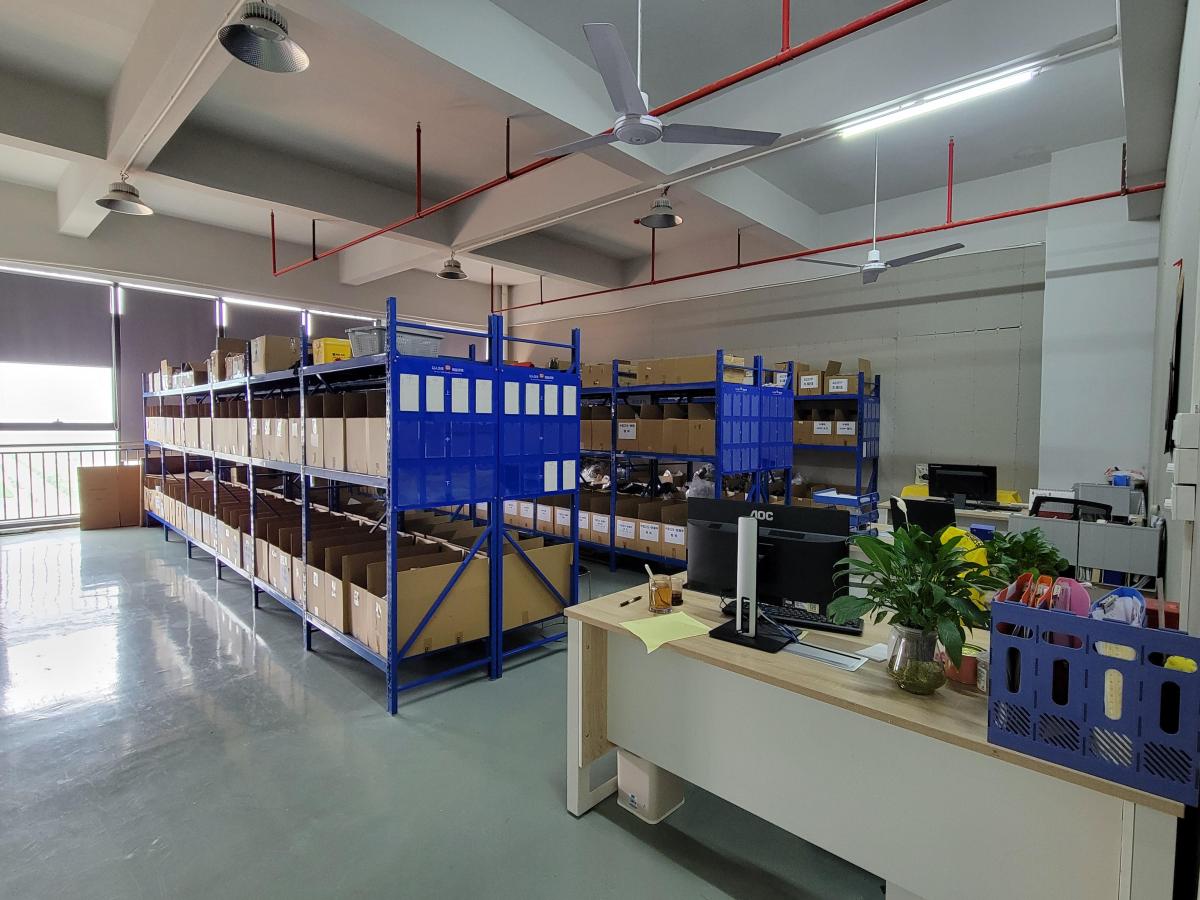
Racks and an adjacent work area provide visible context for storing and organizing materials before production activity.
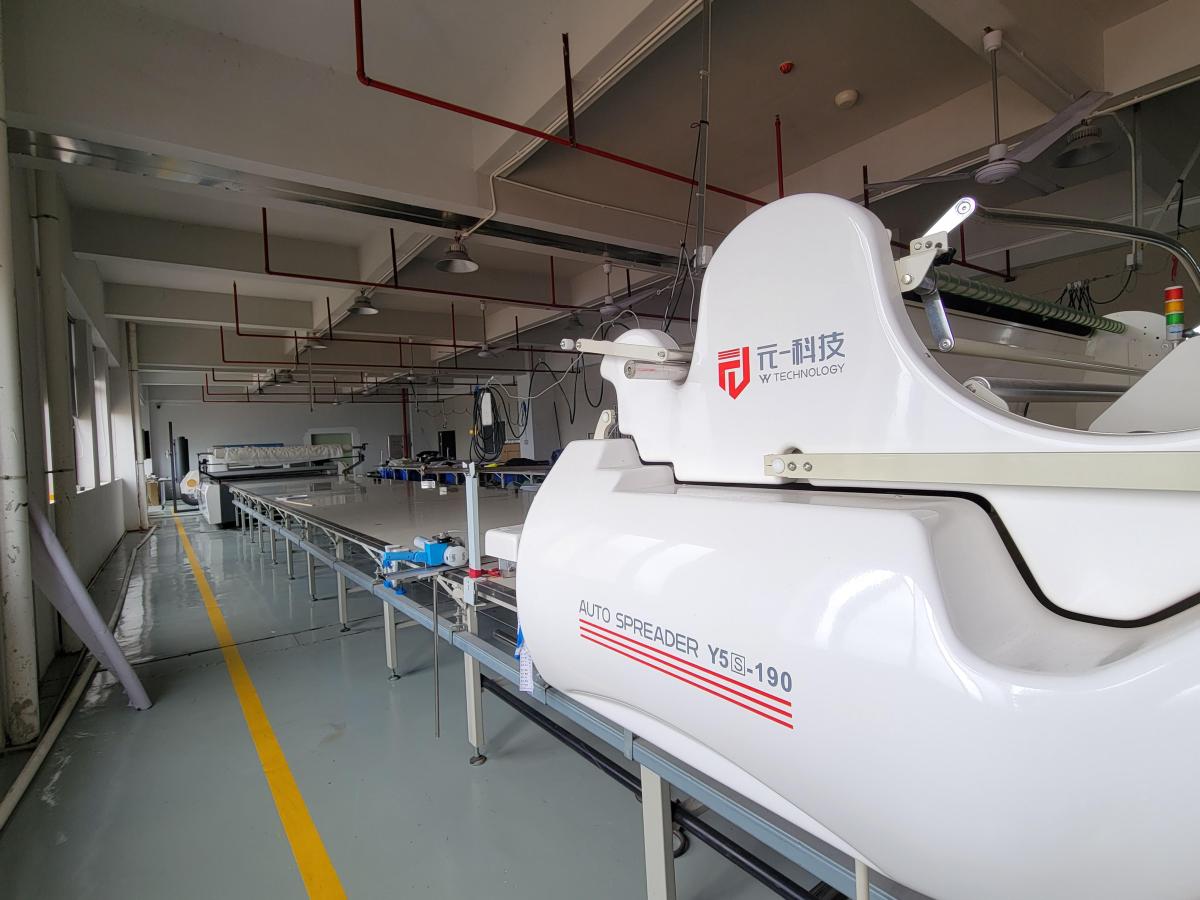
A marked production area and visible garment-cutting equipment show one preparation environment available for project discussion.
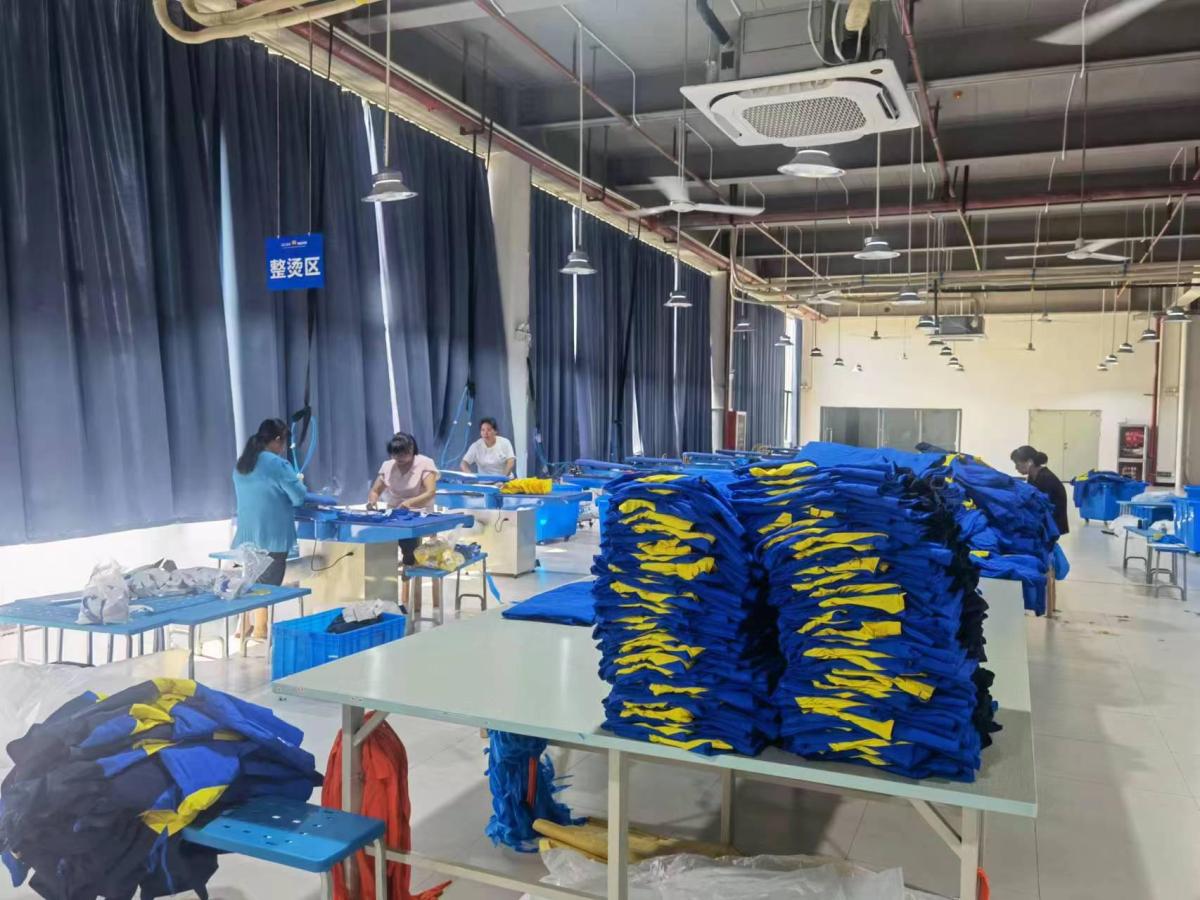
The image shows finished garments being arranged at worktables, giving buyers a view of a later-stage handling area.
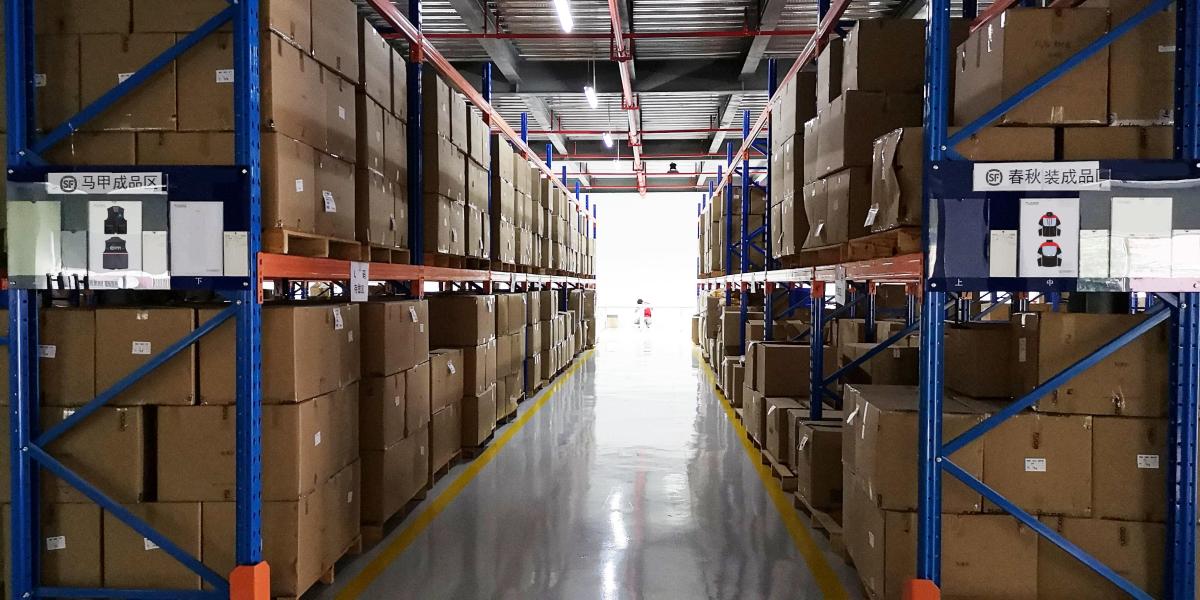
Boxed inventory on industrial racks supplies visual evidence of an organized storage environment without establishing capacity or ownership.
Project-specific checkpoints
A useful manufacturing discussion connects the approved product form with the materials, functional components, construction details and documents required for that project.
Confirm fabric, trims, functional modules and the evidence required for the chosen materials.
Review seams, pockets, openings and the placement of fans, heating zones or other functional parts.
Use the selected sample to confirm fit, operation, visual details and changes before production terms are finalized.
Define branding, size and care information against the final materials and functional system.
Align unit packing, outer cartons and project documents with buyer and market requirements.
Evidence boundary
Locations, operating space, production lines, team size and peak capacity are company-confirmed. Product specifications, available capacity and commercial timing still depend on the selected project.
Material evidence
The reports below are records for specific submitted fabrics or garments. They are not company-wide certifications, and each result applies only to the sample described in the report.
JST-BW202202127
A submitted winter-garment shell sample was tested against basic safety, garment, hydrostatic-pressure and moisture-vapour standards.
No. 2307Z0360
The submitted twill fabric record covers fibre content, colour fastness, dimensional change, pilling, tear strength and basic chemical items.
No. ZLPJ24062341A
A submitted down-filled garment sample received passing results for the listed fill and cleanliness indicators under GB/T 14272-2011.
Report scope, sample identity, company relationship and permission to publish are checked against the selected project before any document or performance figure is released.
Open the full testing report libraryStart with the requirement
Share the intended product, use environment, quantity direction, branding and evidence needs. The next discussion can then focus on the right configuration and confirmation points.
We use only necessary browser storage to remember privacy preferences and support core site functions.