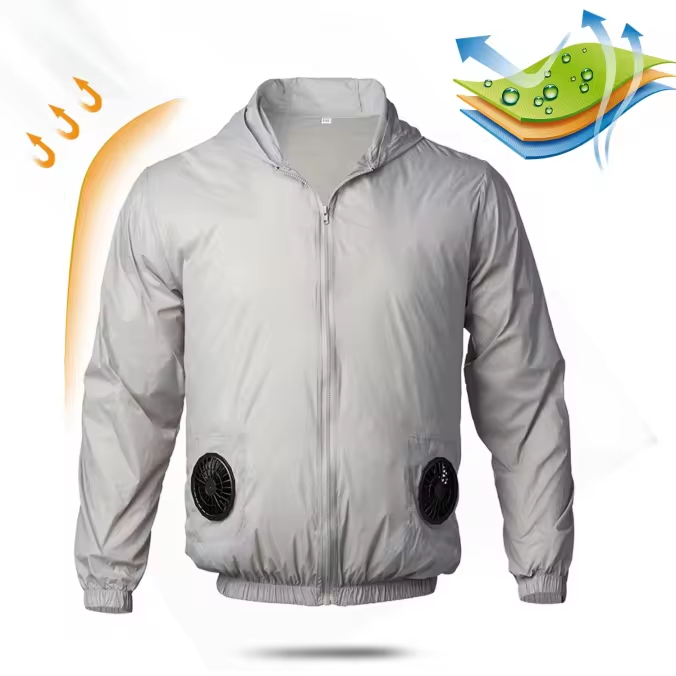
Four-fan jacket
Sun protection Outdoor Anti-UV Fan Cooling Jacket
Hooded long-sleeve jacket with four-fan construction, image-backed colors, size options and OEM customization fields.
View complete product detailsWearable heat-management systems
Compare fan cooling apparel and other clothing with fans by coverage, fan placement, power package and fit. Related evaporative, thermoelectric and water-circulation vest directions are separated so each project begins with the correct cooling architecture.
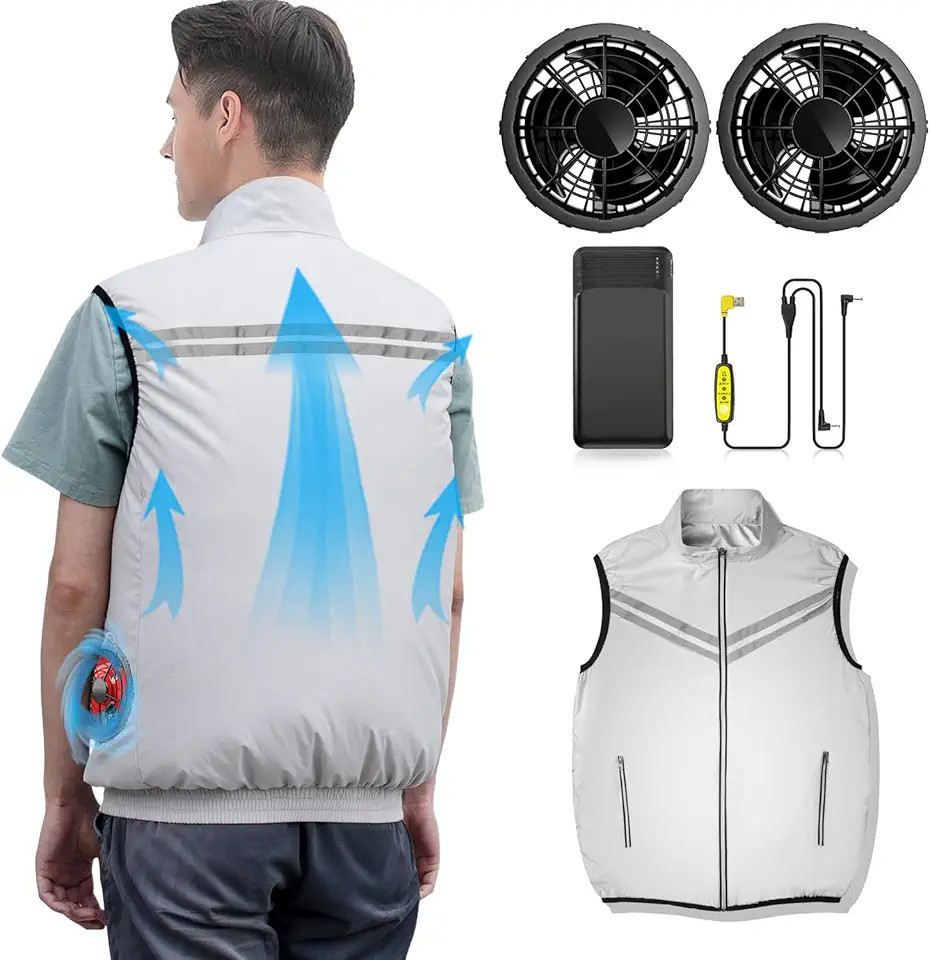
Active airflow principle
Fans positioned around the waist or back draw outside air into the clothing. Garment volume, openings and fit create the route that moving air can take around the wearer before it exits.
That operating logic is different from passive insulation or a single cooling insert. Intake clearance, garment fit and exit space must be reviewed together because each one changes the path available to moving air.
Air entry
Confirm fan location and unobstructed intake around the selected form.
Air path
Review garment volume, fit and openings around movement and worn layers.
Control package
Match the controller, power source and operating modes to one model.
Eight fan cooling apparel models
Use the air conditioned clothing collection to compare jacket and vest coverage first. Open each product page to review its captured gallery, price tiers, color and size options, key attributes, product attributes and supplier detail images before requesting a sample or quotation.
Four-fan jacket
Hooded long-sleeve jacket with four-fan construction, image-backed colors, size options and OEM customization fields.
View complete product details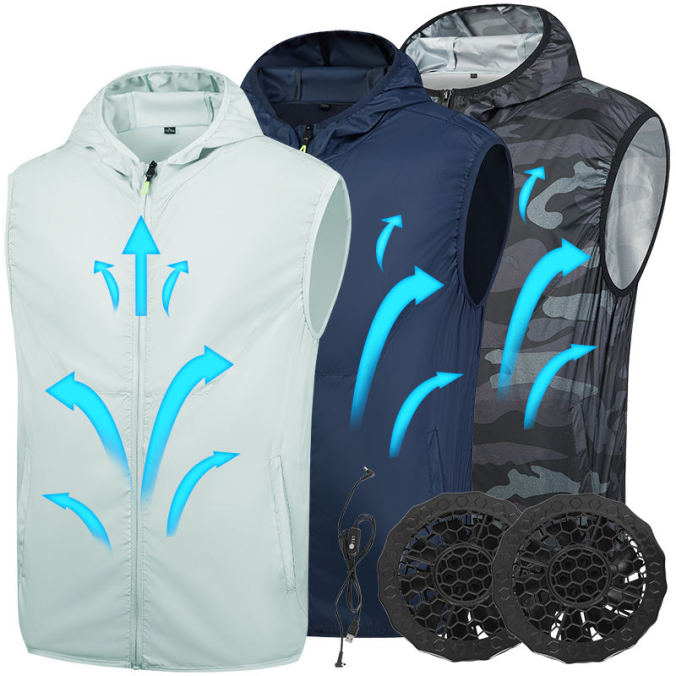
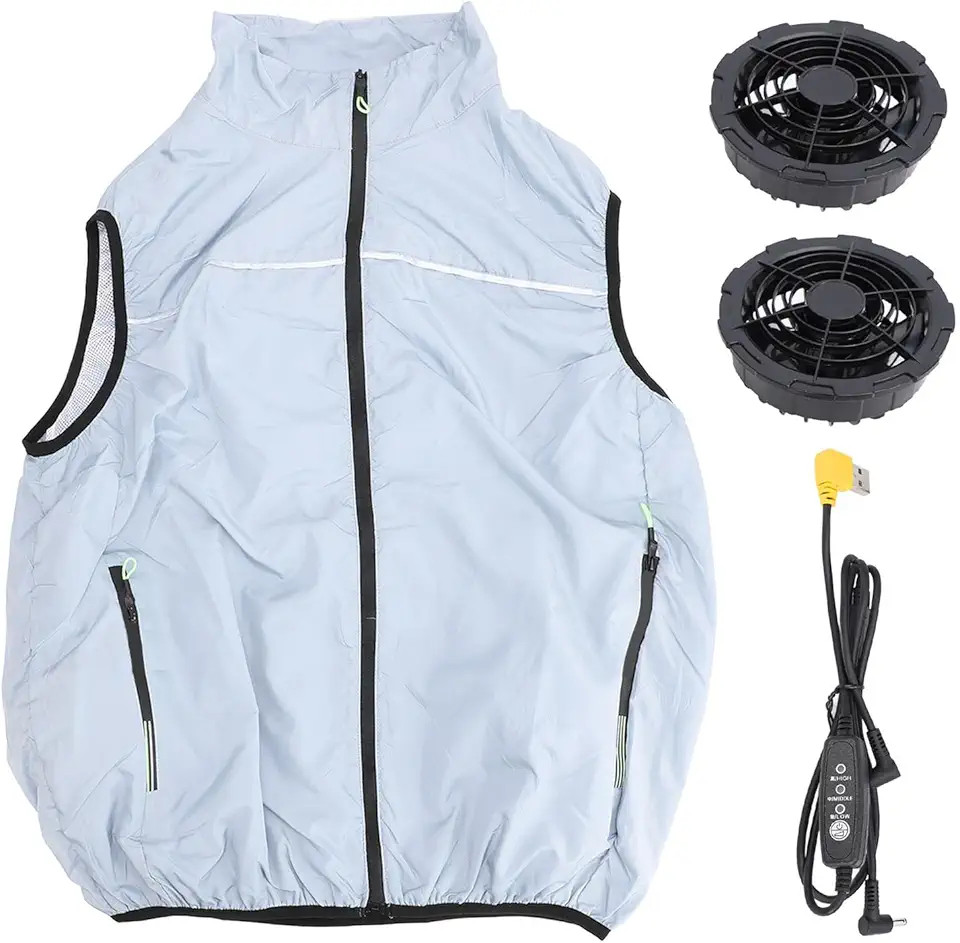
Cooling vest
Three sleeveless color options are shown with two fan components and a wired controller.
View product details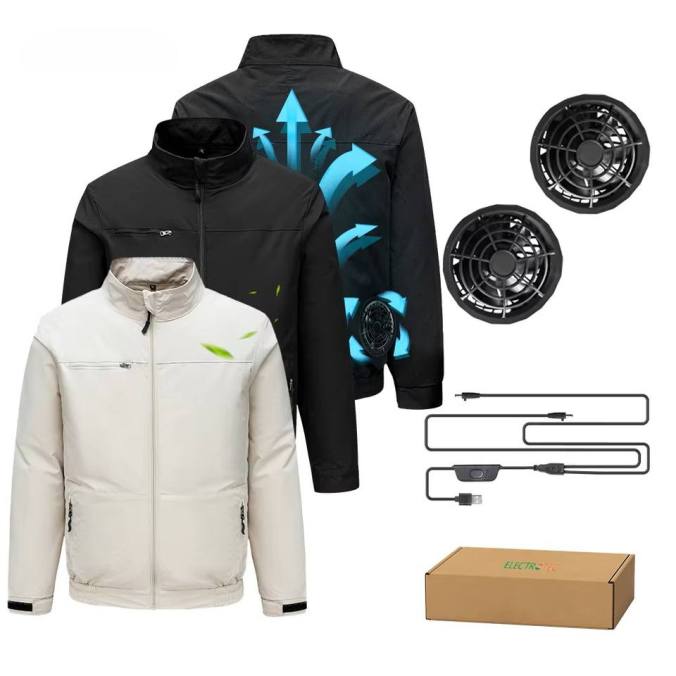
Cooling jacket
Black and light jacket options are shown with the fan and controller package separated for review.
View product details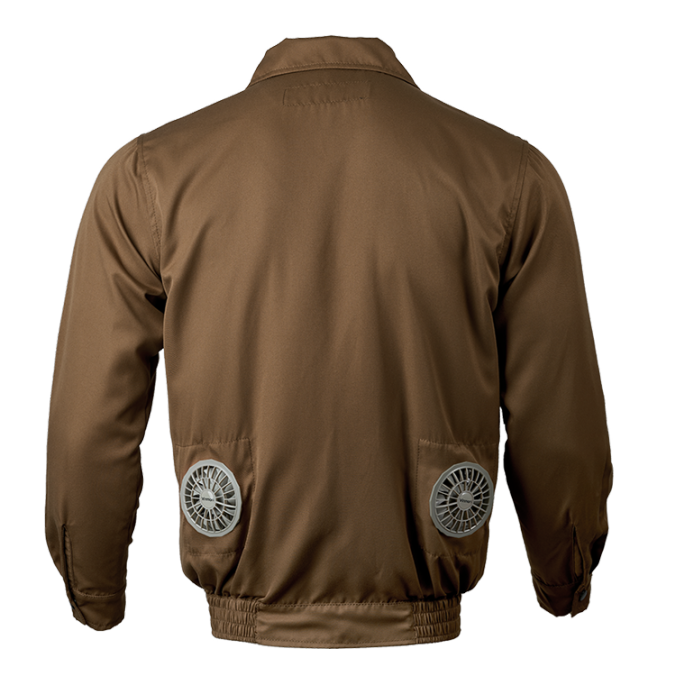
Work jacket
The rear view clearly shows two lower-back fan positions on a full-sleeve workwear form.
View product details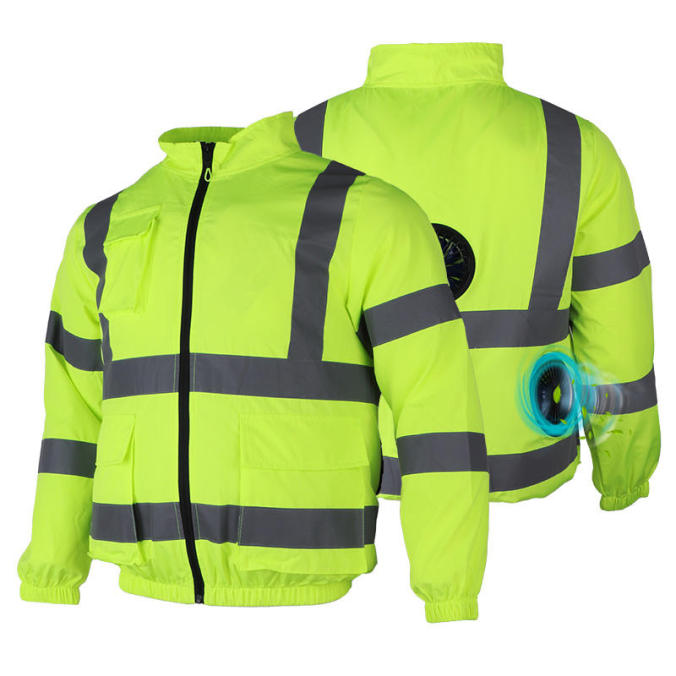
High-visibility work jacket
Front and back views show a long-sleeve fluorescent work jacket with reflective trim and rear fan placement.
View product details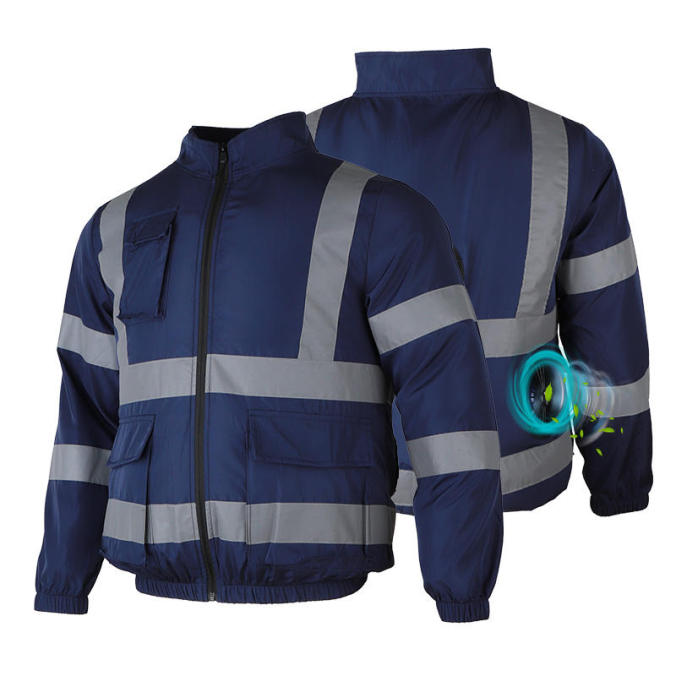
Reflective work jacket
The gallery shows a navy full-sleeve work jacket with reflective bands, pockets and a visible rear fan position.
View product details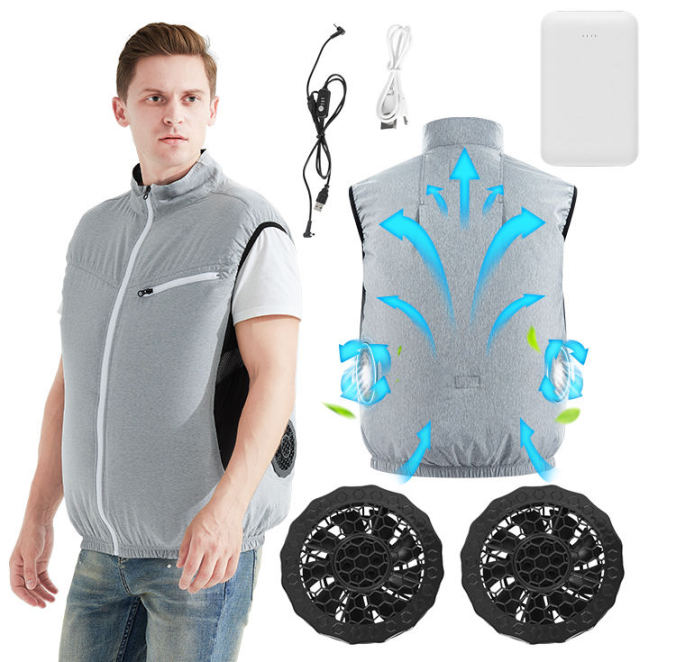
Cooling vest kit
Front and back garment views appear alongside the two fans, controller cable and power-source option.
View product details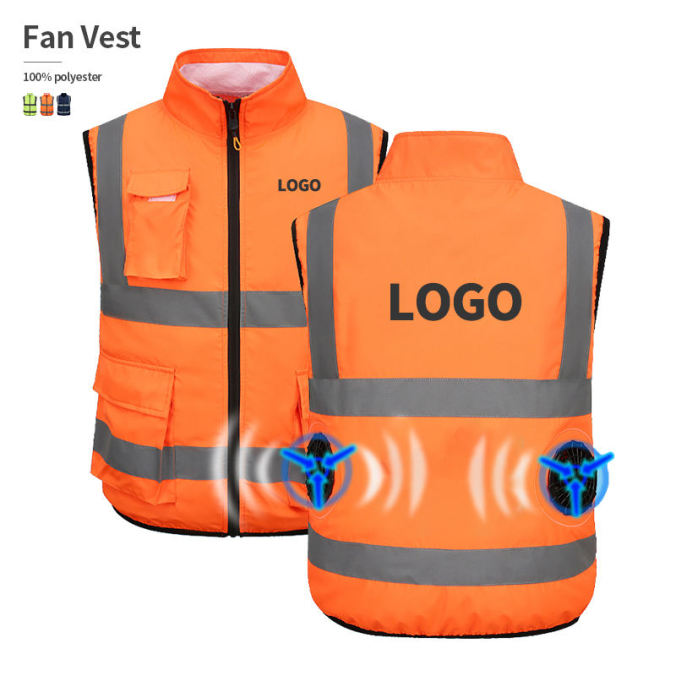
Reflective work vest
Front and back views show reflective bands, pocket placement, two rear fans and listing placeholders for logo positions.
View product detailsSeparate product families
Other wearable cooling technologies
The two directions below are not additional models from the eight fan-powered products above. They use thermoelectric modules or a liquid-circulation loop, so each requires its own product evidence and specification review.
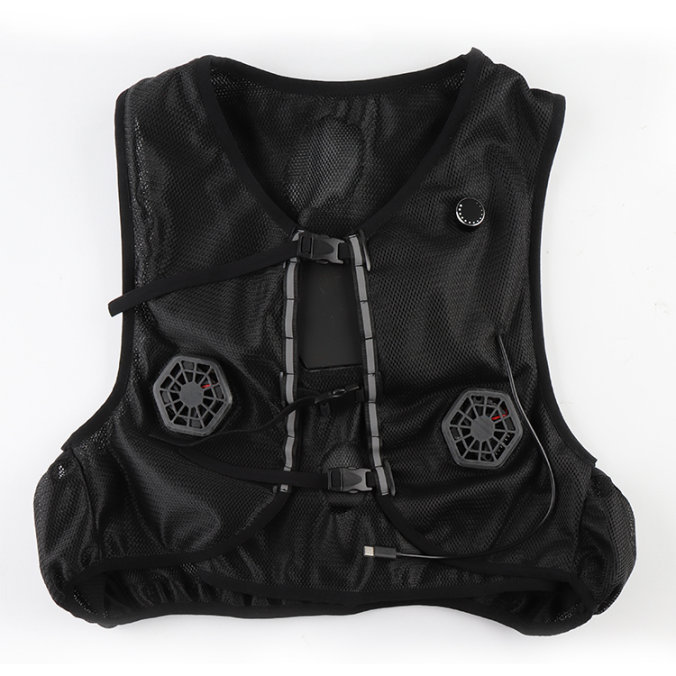
01 / Heat-transfer modules
A module-based wearable direction that requires separate review of module placement, power, heat rejection and garment integration.
Discuss thermoelectric inputs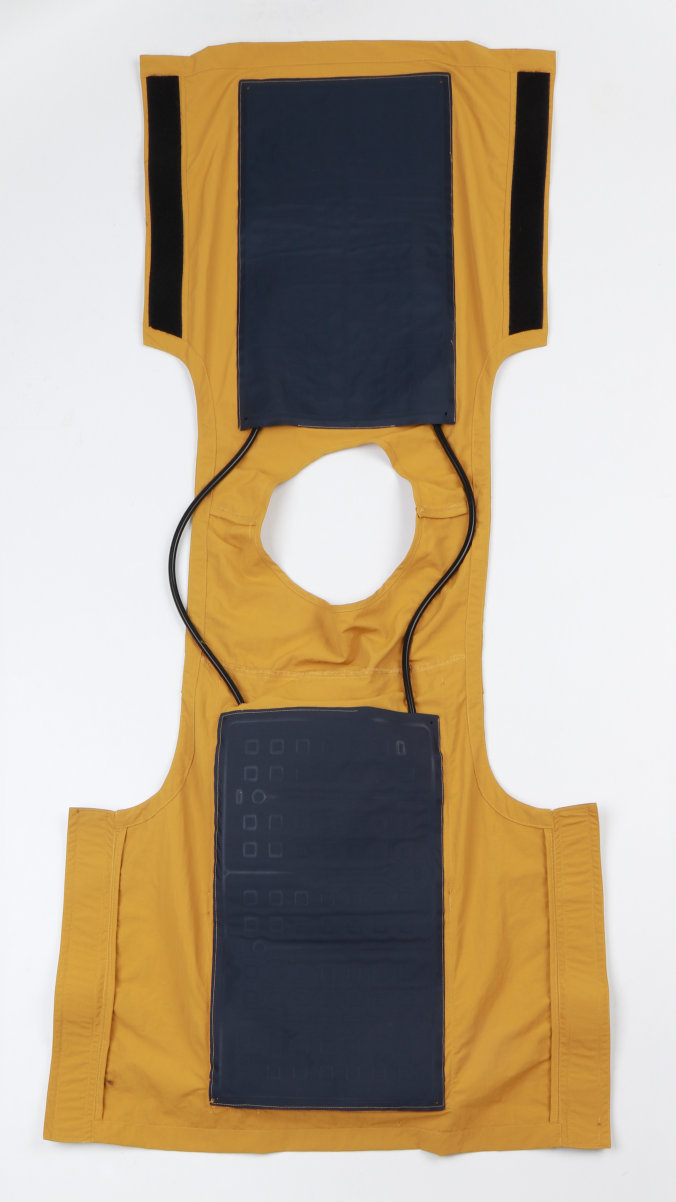
02 / Liquid-circulation loop
A system direction where the reservoir or cooling source, pump, tubing, garment panels and movement requirements must be reviewed together.
Discuss a circulation systemNot sure whether the project belongs with the fan-powered products above or one of these separate cooling systems? Include the intended environment, garment coverage and power constraints in the project brief.
Review custom development inputsApplication fit
Cooling workwear selection begins with the task, not a generic temperature claim. Heat exposure, movement, worn layers, visibility needs and access to components all change the useful garment direction.
01 / Construction and maintenance
Review bending, lifting, tool access, garment coverage and whether reflective or high-visibility elements are required for the specific work setting.
02 / Landscaping and agriculture
Balance arm freedom, sun exposure, pocket use and the way fans or other cooling components sit during repeated outdoor movement.
03 / Warehouse and logistics
Account for vehicle use, loading, lifting and changing airflow conditions. These inputs help separate a warehouse garment brief from a general outdoor cooling request.
04 / Outdoor activities
Fishing, camping and cycling directions require different coverage, fit and component placement around movement and carried equipment.
Before sampling
The eight product pages show multiple garment, fan, battery and component configurations, including fan cooled jacket and vest directions. A useful brief identifies the selected combination and the evidence required for it.
Define heat exposure, movement, indoor-outdoor transitions, sun coverage and the layers worn with the garment.
Choose a vest, shirt or jacket direction around arm freedom, upper-body coverage, pockets and task movement.
Separate fan-driven airflow from evaporative media, thermoelectric modules and water-circulation systems before comparing models.
Confirm the selected model’s fan or module arrangement, controller, power supply, operating modes and component access.
Review fit, fabric, pockets, visibility elements, branding, labels, care instructions and packaging for the intended market.
Match every performance, runtime, safety or compliance statement to the selected model, sample and supporting document.
Buyer questions
These answers define the current evidence boundary and the information Pertemba needs to narrow the product direction.
Start with the coverage and movement required by the task. A vest keeps the arms open, while a jacket can provide more upper-body coverage; fan position, fit and the power package still need model-level confirmation.
No. The available records contain several configurations, so those values must be checked against the selected model and sample rather than treated as one range-wide specification.
High-visibility colors, reflective details and workwear structures appear in the available product directions, but the required visibility design and any target standard must be specified and verified for the selected model.
Share the use environment, garment form, quantity, target market, cooling-system preference, branding needs and required documents. Pertemba can then narrow the eight available models for sample discussion.
Have a hot-weather product brief?
Share the use environment, preferred form, quantity, branding and target-market documents. If active warming is a better fit for the project, compare the separate heated apparel collection; otherwise return to the full functional product system.
Factory and evidence
After narrowing the fan-cooling garment and component direction, use the factory record to understand the production workflow and the testing library to identify evidence that must be matched to the selected material, model and market.
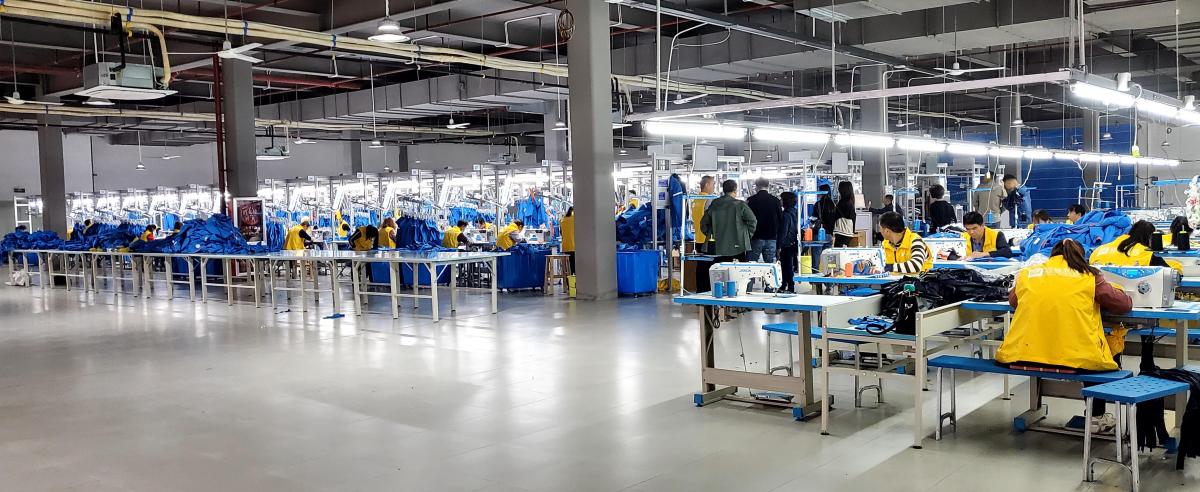
Manufacturing environment
Review supplied factory photographs, workflow stages and the capacity facts that still need project-level scheduling confirmation.
Explore manufacturing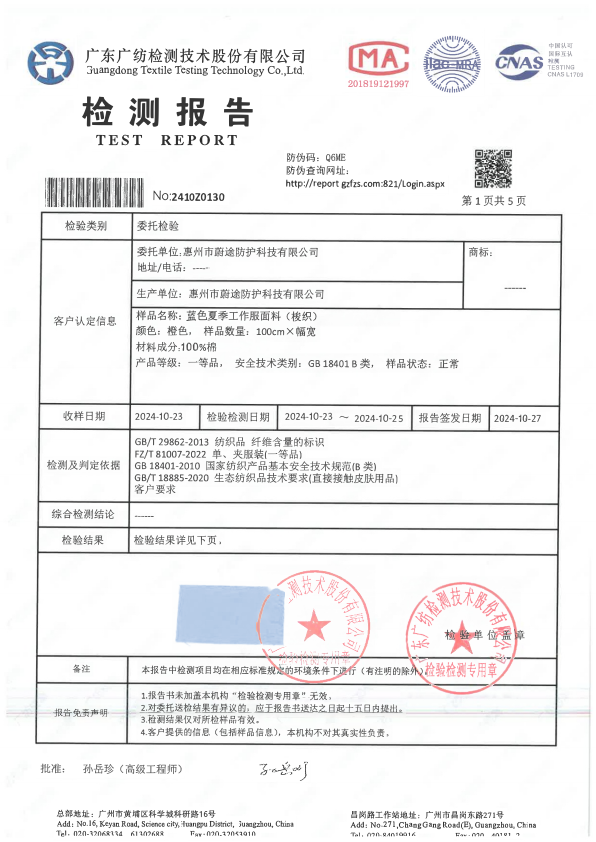
Testing and document review
Check sample identity, report reference, test method and result scope before using any record in a specification or product claim.
Review testing recordsTesting reports are not a range-wide certification claim. Each original document applies only to the sample and scope stated in that report.
We use only necessary browser storage to remember privacy preferences and support core site functions.