Buyer comparison guide
Types of cooling vests: four systems buyers should compare
Cooling vests can move air, use evaporation, circulate cooled water or use a thermoelectric module. These systems do not share the same operating conditions, preparation steps, power needs or maintenance burden.
Direct answer
The four systems solve heat exposure in different ways. Fan garments depend on airflow, evaporative products depend on water and climate, circulation systems add pumps and tubing, and thermoelectric systems must manage both a cold side and rejected heat. Select the mechanism before comparing model specifications.
01 / System overview
Four cooling vest mechanisms buyers may encounter
A useful cooling vest comparison begins with the physical system, not with a supplier title or one performance number. Each mechanism changes what the wearer must carry, what the team must prepare and what evidence the buyer should request.
| Type | Cooling mechanism | Operating dependency | Buyer focus |
|---|---|---|---|
| Fan cooling | Moves ambient air through garment space | Clear fan intake, garment volume and electrical power | Fit, outlets, fan layout, controller and battery package |
| Evaporative | Uses water evaporation from a retained medium | Water preparation and an environment that supports evaporation | Activation, drying, hygiene, climate and wet weight |
| Water circulation | Pumps cooled liquid through a wearable path | Reservoir or cooling source, pump, tubing and power | Leaks, cleaning, connectors, refill and complete system weight |
| Thermoelectric | Creates hot and cold sides with a powered module | Power, body contact and heat rejection | Module position, ventilation, controls, fit and test conditions |
02 / Moving air
Fan cooling apparel depends on airflow, garment fit and power
Fan cooling garments use waist or back-mounted fans to draw outside air into a vest or jacket. The air needs a route around the torso and exits at openings such as the collar, armholes, sleeves or hem. Our guide to how fan cooling clothing works explains this system in more detail.
A buyer should confirm the garment form, intake clearance, fan count and position, controller, connector, voltage, speed settings, battery option and charging arrangement as one package. These fields vary across the current fan cooling apparel range.
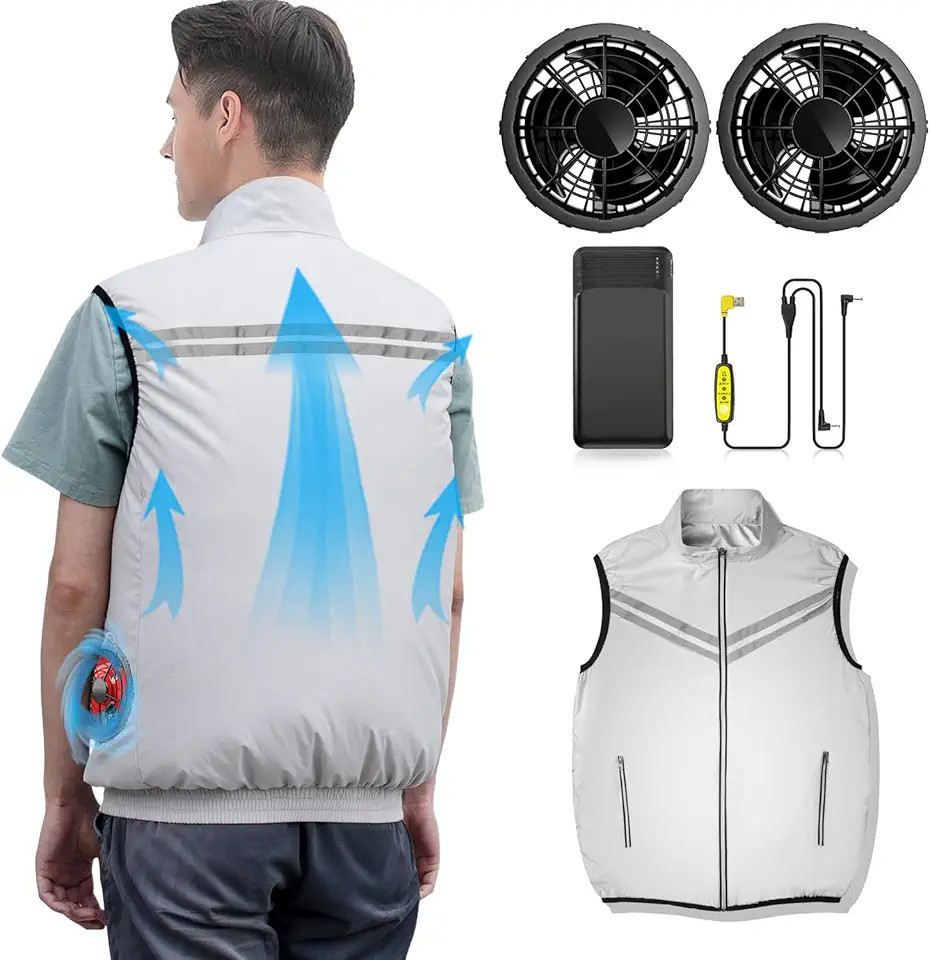
Documented form factors include a hooded four-fan cooling jacket, a hooded fan cooling vest, a stand-collar fan cooling jacket and a long-sleeve fan work jacket. Their source-backed options should remain attached to each model.
03 / Water evaporation
Evaporative cooling requires water preparation and climate checks
An evaporative vest retains water in a fabric or internal medium. Heat is removed as that water evaporates. The product therefore needs a defined activation process, and its useful behavior can change with humidity, airflow, worn layers and the rate at which the medium dries.
Before sampling, ask how the product is soaked or filled, how excess water is removed, how long preparation takes, how wet weight affects movement, and how the vest is cleaned, dried and stored. A supplier claim should identify the exact medium and the conditions used for any duration or temperature statement.
Evidence boundary
Pertemba's current source registry includes evaporative cooling product references, but no evaporative vest has yet been promoted as a public model page. This section defines the mechanism and buyer questions; it does not publish model-level performance.
04 / Pumped liquid loop
Water-circulation vests add pumps, tubing and maintenance
A circulation system sends cooled liquid through tubing or channels near the body. The wearable garment is only one part of the assembly. The brief also needs to identify the reservoir or cooling source, pump, hoses, connectors, controller, power source and how the full system is carried.
Buyers should inspect tubing placement during movement, connector security, leak controls, refill access, condensation, cleaning and drying. Ask for the complete in-use weight and the conditions behind cooling-duration data rather than comparing a garment-only weight with another complete system.
05 / Powered cold surface
Thermoelectric wearables must reject heat as well as create a cold side
A powered thermoelectric module creates a cold side and a hot side. Cooling at the body-facing side therefore depends on moving heat away from the opposite side. Module contact, ventilation, heat sinks or fans, power demand, controls and garment fit belong in the same review.
The buyer should ask where the modules sit during bending and lifting, how rejected heat is managed, what skin-contact safeguards and instructions apply, and how performance was measured. Generic temperature ranges from a source title are not a substitute for the selected sample's specification and test evidence.
06 / B2B selection
Use one comparison checklist before selecting a sample direction
Define the job and environment.
Record temperature exposure, humidity, airflow, activity, layers, tools, other PPE and access to water or electrical charging.
Select one cooling mechanism.
Do not compare specifications until fan, evaporation, circulation or thermoelectric cooling has been chosen.
List every system component.
Include water media, pumps, tubes, fans, controllers, modules, heat rejection, batteries, chargers and carrying arrangements as applicable.
Fix the garment brief.
Confirm coverage, sizing, movement, fabric, pockets, closures, branding, care, packaging and the interface between the garment and cooling hardware.
Request comparable evidence.
Temperature, runtime, weight and durability statements should identify the exact sample, ambient conditions, preparation, power source, load and test method.
For work projects, the cooling workwear application guide helps translate task, movement and site rules into a garment brief.
Buyer FAQ
Questions about cooling vest types
Which type of cooling vest is best for outdoor work?
There is no universal best type. The right choice depends on ambient conditions, access to water or power, task duration, movement, worn layers and the maintenance process the buyer can support.
Is a fan cooling vest the same as an evaporative cooling vest?
No. A fan garment moves ambient air through the space inside the garment, while an evaporative product depends on retained water and evaporation. Their preparation, climate limits and maintenance questions differ.
What should buyers verify for a water-circulation cooling vest?
Confirm the reservoir or cooling source, pump, tubing path, connectors, leak controls, cleaning method, refill process, power package and the complete weight in use.
Can cooling performance be compared from product titles alone?
No. Temperature, runtime and cooling-area claims need the exact model, test setup, ambient condition, load, power source and measurement method before they can be compared.
Continue the comparison
Move from cooling mechanism to a reviewable brief
Use the airflow guide for a deeper fan-system explanation, or compare the currently documented fan garments before requesting a sample.
Technical guide
See how fan cooling clothing moves air
Review intake clearance, garment volume, exit space, controls and power as one airflow system.
Product family
Compare documented fan cooling models
Review current jackets and vests with their individual galleries, options and source-backed attributes.
Choose the mechanism first
Define the cooling system before comparing sample specifications
Share the work environment, preferred cooling principle, garment coverage, expected quantity, branding needs and the evidence your team requires.