Technical guide
How fan cooling clothing works: airflow, fit and power
Fan cooling clothing draws ambient air into a vest or jacket and guides it through the space between the garment and the wearer. The fan is only one part of the system: intake clearance, garment volume, exit space, controls and power must work together.
Direct answer
A garment-mounted fan pulls outside air through its intake. The garment creates a channel around the body, and openings at the collar, sleeves or hem allow air to move out. A useful system therefore depends on both the electrical components and the garment structure.
01 / Air movement
The fan intake begins an airflow path inside the garment
The available product images show fans positioned around the waist or lower back. These fans draw ambient air into the garment. The incoming air then needs internal space to travel around the torso before leaving through available openings.
This is different from a sealed air-conditioning system. Fan cooling clothing moves the air that is already present in the working environment. Heat, humidity, movement, worn layers and outside airflow can all change the user experience.
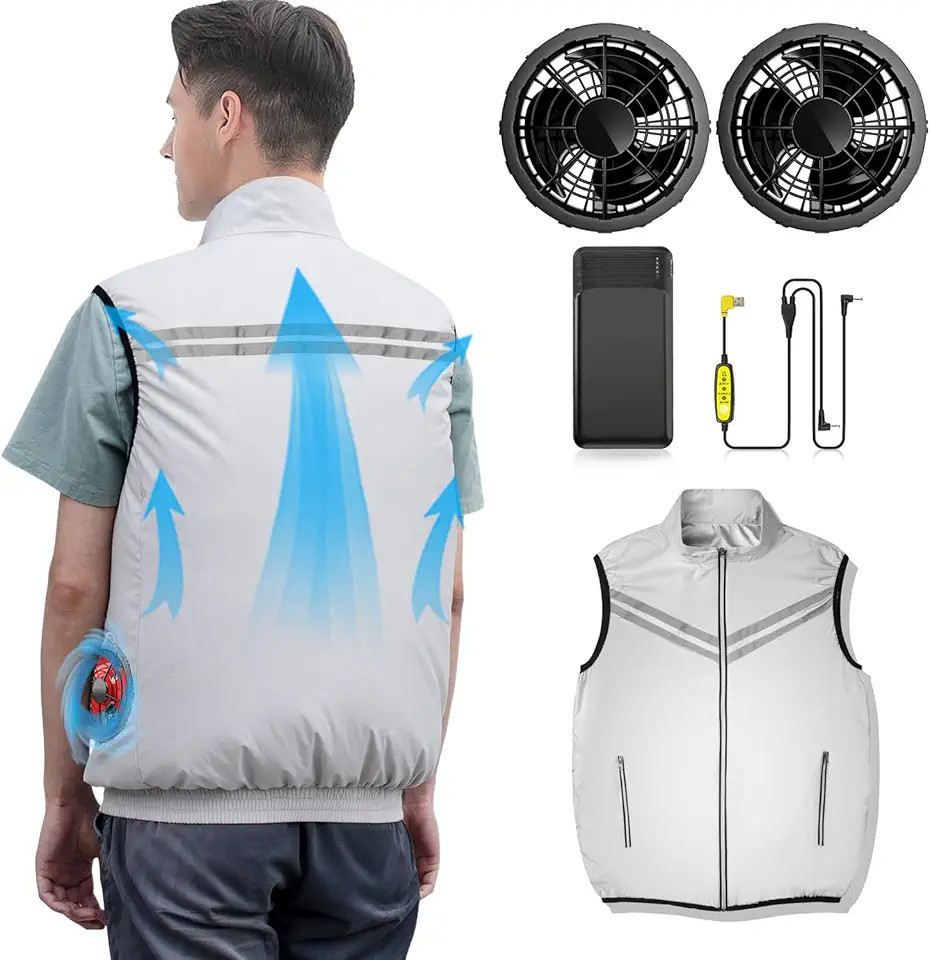
Intake
The fan opening needs clearance to draw in ambient air.
Internal path
Garment volume gives moving air a route around the body.
Exit
Collar, sleeve and hem openings let displaced air leave.
02 / Garment structure
Garment fit and exit space affect the perceived airflow
The garment should not be treated as a neutral shell. A close fit may reduce the space available for air to circulate, while excessive looseness may change where air travels and exits. The correct balance depends on body movement, layers worn underneath and the intended task.
Vest and jacket forms create different paths. A vest leaves the arms open and can suit tasks that prioritize reach and layering. A long-sleeve or hooded jacket adds coverage but also changes garment volume, outlet locations and how the item interacts with tools or other protective equipment.
For work applications, start with the task rather than a universal cooling claim. The cooling workwear application guide organizes these decisions around construction, logistics, agriculture and outdoor maintenance.
03 / Complete system
Fan placement, controller and power source work as one package
A usable sample needs more than a garment and two circular openings. Buyers should review the fan count, fan location, attachment method, controller, connector, voltage, speed settings, battery option and charging arrangement as one configuration.
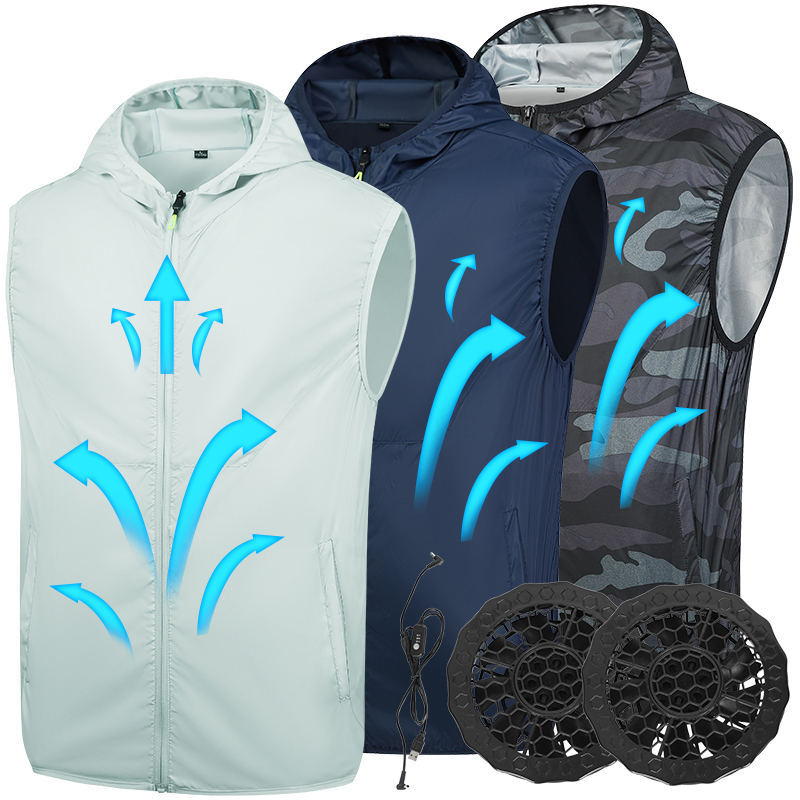
The eight current fan cooling apparel models show different jacket, vest, hood, collar, visibility and fan-layout directions. Their electrical and performance fields must remain attached to the selected model.
04 / Model selection
Vests, jackets and fan layouts change the design brief
| Decision | Vest direction | Jacket direction |
|---|---|---|
| Coverage | Torso coverage with open arms | Long-sleeve, hooded or collar-based coverage |
| Movement review | Reach, lifting and layering freedom | Sleeve, cuff, hood and tool interaction |
| Air outlets | Armholes, collar and hem | Collar, cuffs, hem and possible hood opening |
| Project checks | Fit, fan position, pockets and branding | Coverage, fabric, closures, visibility and component placement |
Examples include a hooded four-fan cooling jacket, a hooded fan cooling vest, a stand-collar fan cooling jacket and a long-sleeve fan work jacket. Each page keeps its own source-backed options and attributes.
05 / B2B review
Questions buyers should verify before sampling
Define the environment and task.
Describe heat exposure, humidity, activity, worn layers, tools, other PPE and indoor-outdoor transitions.
Select one garment form.
Choose vest, stand-collar jacket, hooded jacket or another documented model before comparing specifications.
Fix the electrical package.
Confirm fan count, voltage, controller, connector, speed settings, battery inclusion and charging method.
Request conditions behind performance data.
Runtime or airflow statements should identify the exact fan, battery, speed and test conditions used.
Approve garment and commercial details.
Review material, sizing, color, pockets, closures, care, branding, packaging, quantity and required documents.
06 / Evidence boundary
Generic airflow and runtime claims have clear limits
The current evidence supports the operating principle and visible product construction. It does not support one fixed temperature reduction, airflow volume, battery runtime or safety certification across the full range.
A statement about a selected sample should be traceable to that exact garment, fan, controller and power package. Supplier-page wording is a starting point for verification, not a substitute for the approved specification and supporting documents.
Buyer FAQ
Questions about how fan cooling clothing works
Does fan cooling clothing lower the air temperature?
Not by itself. The fans move ambient air through the garment, so the result depends on environmental conditions, garment fit, activity, openings and the selected fan-and-power package.
Why does fit matter in a fan cooling vest or jacket?
Fit helps create the internal space used by moving air. A garment that collapses against the body or has no useful exit path can restrict circulation even when the fans are operating.
Are the fan count, voltage and runtime the same across all models?
No. The available product records show different fan layouts, voltage wording, controllers and garment forms. Runtime must be tied to one fan, battery and speed configuration under stated test conditions.
What should a buyer verify before approving a sample?
Verify the garment form, fan count and placement, controller, voltage, battery inclusion, speed settings, fit, size range, material, care instructions and the evidence behind any runtime or performance claim.
Apply the principle
Move from airflow theory to a product brief
Use the cooling vest types comparison to choose the mechanism first, then compare real models and translate the job, movement and site rules into a sample direction.
Prepare a reviewable sample
Specify the garment, airflow system and approval evidence together
Share the use environment, preferred garment form, expected quantity, branding requirements and the fan, power and documentation questions your team must settle.