Technical guide
How does heated clothing work? Power, zones and garment layers
Heated clothing sends controlled electrical power through flexible heating elements positioned in selected garment areas. The useful system includes the battery, connector, controller, wiring, heating layout, garment fit and insulating layers.
Direct answer
A battery or approved power source feeds a controller, which regulates electricity sent through flexible heating elements. Those elements warm selected areas, while garment fit and surrounding layers influence how the wearer experiences that heat.
01 / Electrical path
The basic path runs from power to controller to heating element
A complete system starts with a compatible power source. A cable and connector carry power to a controller, and the controller changes the output sent to flexible heating elements sewn or integrated into selected garment areas.
The clothing shell remains part of the system. Pockets must hold the power source securely, wiring needs a protected route, controls must remain reachable, and the finished garment must allow normal movement without stressing connectors or heating components.
Power
Battery, connector and voltage must match the selected configuration.
Control
The controller manages the operating settings provided by that model.
Heat
Flexible elements place active warmth in documented garment zones.
02 / Active areas
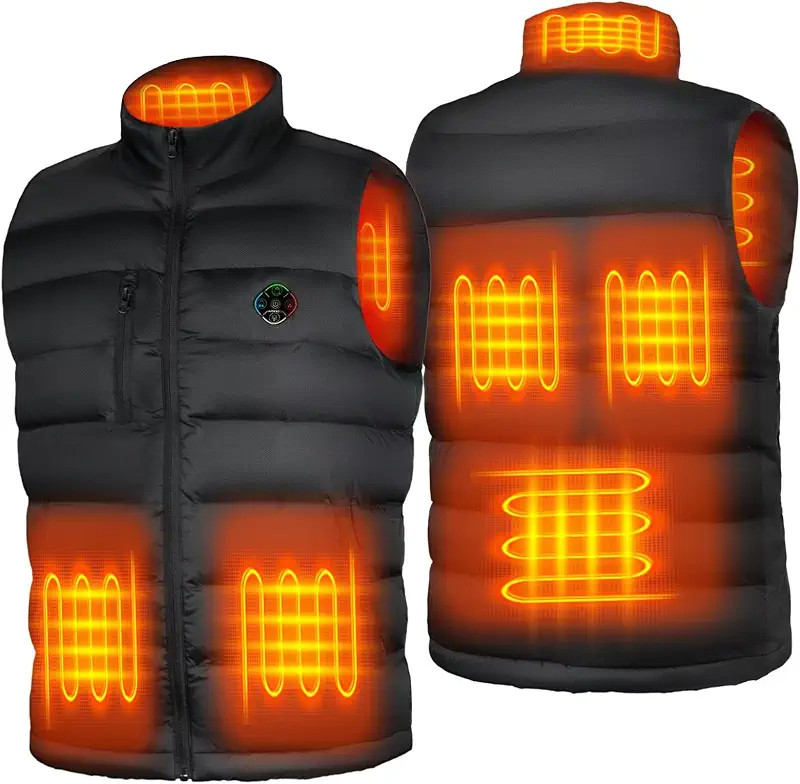
Heating zones place active warmth around selected body areas
Current product references show heating layouts around the chest, back, collar, pockets and other selected areas. Zone count does not tell the whole story: size, position, control grouping and contact with inner layers also affect the design brief.
03 / Wearing system
Garment layers, fit and activity change the buyer brief
A heated garment may be worn as an inner vest, a mid-layer or an outer work jacket. Each position changes the required fit, insulation, weather protection, freedom of movement and access to controls.
The heated workwear application guide organizes these questions around cold work, movement, layering and site conditions. Buyers should define the task before requesting a universal temperature or runtime target.
04 / Product form
Vests, jackets, hoodies and shirts create different systems
| Form | Coverage question | Project focus |
|---|---|---|
| Vest | Core warmth with open arms | Layering, close fit, zone position and battery pocket |
| Jacket | Torso and sleeve coverage | Outer fabric, hood, cuffs, weather exposure and movement |
| Hoodie | Casual mid-layer coverage | Fleece structure, controls, laundering and branding |
| Shirt jacket | Lighter overshirt form | Fabric hand, layering, closures and heating layout |
Examples include a detachable-hood softshell heated jacket, a fleece-lined heated hoodie jacket, an eight-zone unisex heated vest and a heated plaid flannel shirt jacket. The heated vest, jacket and hoodie comparison focuses on choosing among these garment forms.
05 / Model verification
Temperature, runtime, charging and care belong to the selected model
Fix the electrical package.
Confirm voltage, connector, battery inclusion, capacity, charger and control settings together.
Request the test conditions.
Temperature and runtime data need the exact sample, setting, battery, ambient condition and measurement method.
Approve care instructions.
Review power removal, connector protection, washing, drying, storage and pre-use inspection.
06 / Evidence boundary
Generic heated-clothing performance claims have clear limits
The current evidence supports the operating principle and documented garment forms. It does not support one shared temperature range, runtime, heating material, wash method, waterproof rating or safety certification across the full range.
Every public statement should remain traceable to the selected garment, heating layout, controller, battery and supporting documents.
Buyer FAQ
Questions about how heated clothing works
How does heated clothing create warmth?
A power source sends electricity through a controller and flexible heating elements placed in selected garment areas. The garment layers then help retain and distribute the resulting warmth.
How do heated jackets work?
Heated jackets route controlled electrical power from a compatible battery through a controller to heating elements placed in selected jacket zones. The shell, insulation, lining and fit then affect how that warmth is retained around the wearer.
How do heated vests work?
Heated vests use the same battery-to-controller-to-element path, but the sleeveless form concentrates the garment around the torso. Heating-zone placement, battery compatibility, fit and layering still need to be confirmed for the exact vest model.
Do all heated jackets use the same heating zones?
No. Zone count and placement vary by model and garment form. Buyers should review a zone diagram and the selected sample rather than applying one layout across the range.
What determines heated-clothing runtime?
Runtime depends on the exact battery, voltage, controller setting, heating-element load, ambient conditions and test method. A useful runtime statement must identify these conditions.
Can every heated garment be machine washed?
No general wash method should be assumed. Confirm battery removal, connector protection, wash cycle, drying instructions and inspection steps for the selected model.
Apply the principle
Move from heating theory to a product brief
Compare the documented garment forms, then define the work environment, heating layout, power package, care instructions and approval evidence.
Product family
Compare heated apparel models
Review current vests, jackets, hoodies and shirts with model-level attributes.
Application guide
Define heated workwear around the job
Translate cold exposure, movement and layers into a sample direction.
Care guide
Check how a heated jacket may be washed
Use the model label, detachable-power design and connector instructions to define a safe care process.
Prepare a reviewable sample
Specify the garment and heating system together
Share the environment, garment form, heating-zone direction, power questions, quantity, branding and documentation needs.