Buyer comparison guide
Heated vest vs jacket vs hoodie: which form fits the brief?
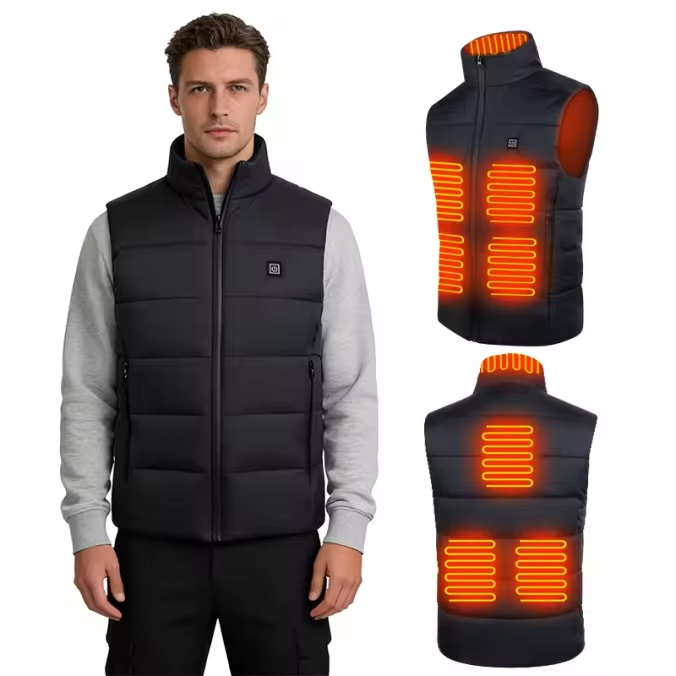
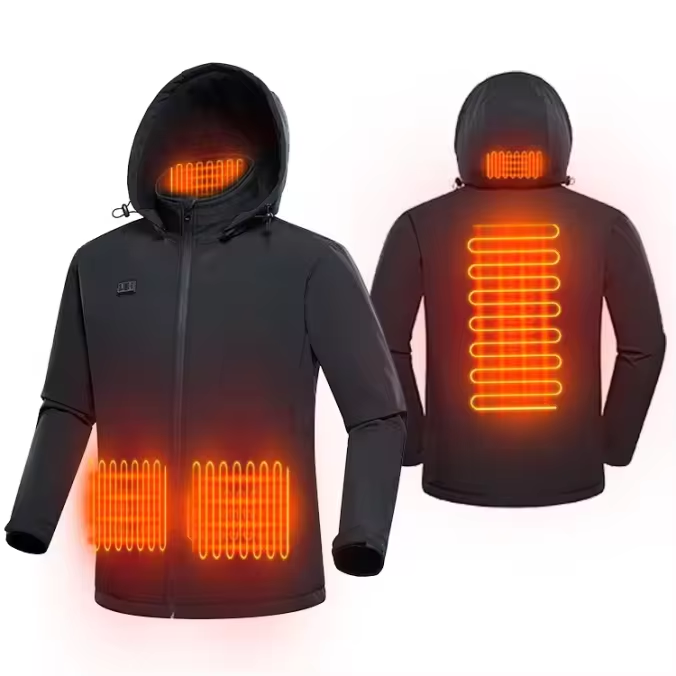
A heated vest prioritizes core coverage and free arm movement. Jackets, hoodies and shirt jackets add different sleeve, hood, layering and weather-exposure decisions. Choose the garment form first, then verify its exact heating and power system.
Direct answer
Choose a vest for core coverage with less sleeve restriction, a jacket for outer-layer coverage, a hoodie for a softer mid-layer direction, or a shirt jacket for a lighter overshirt form. Then confirm all heating, power, care and evidence fields on the selected model.
01 / Garment form
Vest, jacket, hoodie and shirt coverage solve different clothing tasks
The form changes more than appearance. It changes torso and arm coverage, the position of cuffs and hoods, how the garment layers under other clothing, and where pockets, controls and a power source can sit.
| Form | Coverage direction | Common project question | Confirm before sampling |
|---|---|---|---|
| Vest | Torso with open arms | Will it be an inner or mid-layer? | Fit, hem, armholes, pockets and battery position |
| Jacket | Torso and sleeves | Does it serve as the outer layer? | Shell, insulation, hood, cuffs and weather exposure |
| Hoodie | Casual torso, sleeves and hood | Is a soft mid-layer preferred? | Fleece structure, hood, closures, controls and care |
| Shirt jacket | Lighter overshirt coverage | Is a less bulky form required? | Fabric hand, closures, layering and trim direction |
02 / Wearing system
Layering, mobility and weather exposure should decide the form
Start with the work or use sequence. Record reaching, bending, driving, lifting, tool or backpack use, other PPE, wind and moisture exposure, and the layers worn above and below the heated garment.
The heated workwear application guide maps those questions across construction, cold storage, field service and infrastructure work. A vest may reduce sleeve bulk, while an outer jacket can add coverage but must work with tools and other layers.
03 / Model boundary
Heating zones and power variables do not transfer across garment forms
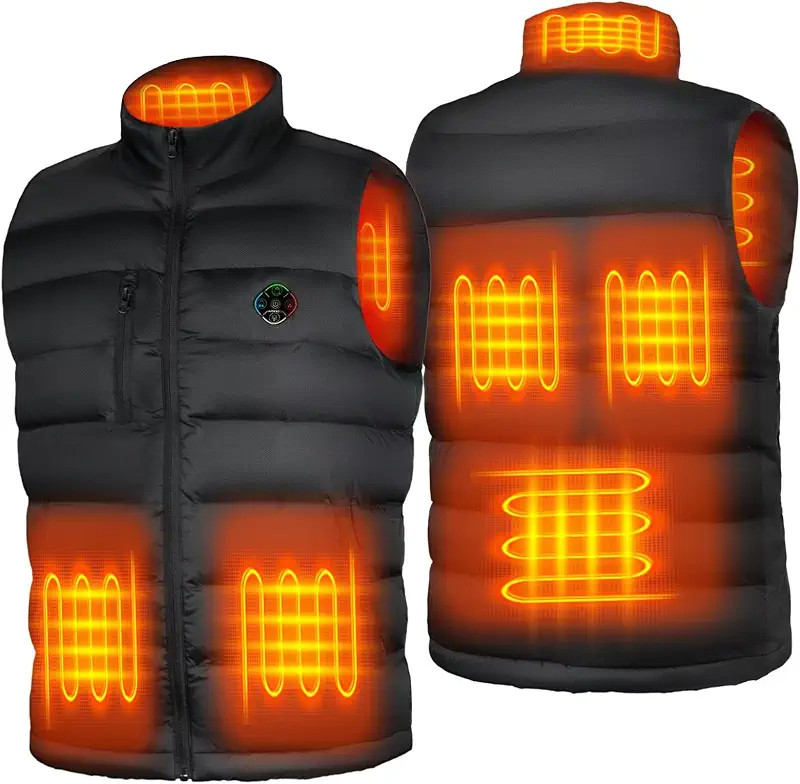
A vest, jacket and hoodie may each use a battery, controller and flexible heating elements, but that shared principle does not establish identical zone count, placement, voltage, connector, battery, settings, temperature or runtime.
Use the guide to how heated clothing works for the power-to-controller-to-element path. For procurement, attach every performance statement to the exact sample and its test conditions.
04 / Custom program
Branding, sizing, trims and packaging belong in the first sample brief
The current evidence supports logo, color and size configuration directions, but it does not establish one range-wide minimum order or customization menu. Define the program around the selected garment and market.
Fit and size range
Specify wearer profile, layering allowance, grading, sample sizes and measurement approval.
Brand application
Define logo method, position, size, color and its distance from controls and heating components.
Fabric and trims
Confirm shell or fleece direction, insulation, zipper, hood, cuffs, pockets, labels and color standards.
Packaging
List included electrical parts, instructions, warnings, labels, unit pack and carton requirements.
Current product references include a detachable-hood softshell heated jacket, a fleece-lined heated hoodie jacket, an eight-zone unisex heated vest and a heated plaid flannel shirt jacket. Review each page for its own captured options.
05 / Approval evidence
Care, safety and documentation questions come before approval
Fix the complete electrical package.
Record voltage, connector, battery inclusion, capacity, charger, controller and settings for the exact sample.
Approve model-specific care.
Confirm component removal, connector protection, washing, drying, storage and inspection instructions.
Request traceable test evidence.
Temperature, runtime, waterproof or durability statements need a named sample, conditions, method and supporting record.
Check the target market and workplace.
Do not infer electrical, garment or PPE compliance from a product title or from another model.
06 / Selection checklist
Build a custom heated-apparel brief in six decisions
| Decision | What to record | Approval output |
|---|---|---|
| 1. Use case | Task, exposure, activity and worn equipment | Application statement |
| 2. Form | Vest, jacket, hoodie or shirt direction | Closest reference model |
| 3. Garment | Fit, fabric, insulation, hood, cuffs and pockets | Construction specification |
| 4. Heating system | Zones, controls, power, connector and charging | Electrical configuration |
| 5. Brand program | Logo, colors, sizes, labels and packaging | Artwork and pack approval |
| 6. Evidence | Care, test conditions, documents and market needs | Review checklist |
Buyer FAQ
Questions about heated garment forms
Is a heated vest or heated jacket better for work?
Neither form is universally better. A vest favors arm freedom and layering, while a jacket adds sleeve and outer-layer coverage; the task, weather exposure and other worn equipment should decide the sample direction.
Does a heated hoodie use the same heating system as a heated jacket?
Do not assume so. Heating-zone layout, voltage, controller, battery, connectors, settings and care instructions belong to the exact model even when two garments look similar.
What should buyers specify for branded heated apparel?
Specify garment form, fabric and color direction, size range, logo method and position, trims, labels, packaging, heating layout, power package and the documents needed for approval.
Can runtime and temperature be compared across garment forms?
Only when the exact samples and test conditions are comparable. Battery, setting, heating load, ambient conditions, layers and measurement method must be identified before a useful comparison can be made.
Continue the decision
Connect the form choice to the heating system
Review the electrical principle, then compare current heated apparel models without transferring specifications between them.
Technical guide
Understand power, controls and heating zones
See how the battery, controller, heating elements and garment layers work as one model-specific system.
Product family
Compare current heated apparel models
Review real vest, jacket, hoodie and shirt-jacket references with their individual options.
Prepare a reviewable brief
Choose the garment form before fixing the heating specification
Share the application, preferred form, fit and fabric direction, heating and power questions, quantity, branding, packaging and evidence requirements. Add the model-specific care process from the guide to washing a heated jacket before approving labels.