B2B buying guide
Powered cooler box buying guide: compare the evidence, not just the claim
A powered cooler box should be compared by product form, usable space, loading pattern, power package, ventilation and a defined test record. A 12V label or a generic cooling claim is not enough to compare suppliers fairly.
Direct answer
Start by separating the physical product form from the claimed result. Then compare the exact model, usable interior, power input, ventilation, load and test conditions. Pertemba's current documented evidence supports a soft thermoelectric cooler and warmer bag, not a rigid powered cooler box.
01 / Product form
Soft cooler bag and rigid powered cooler box requirements are different
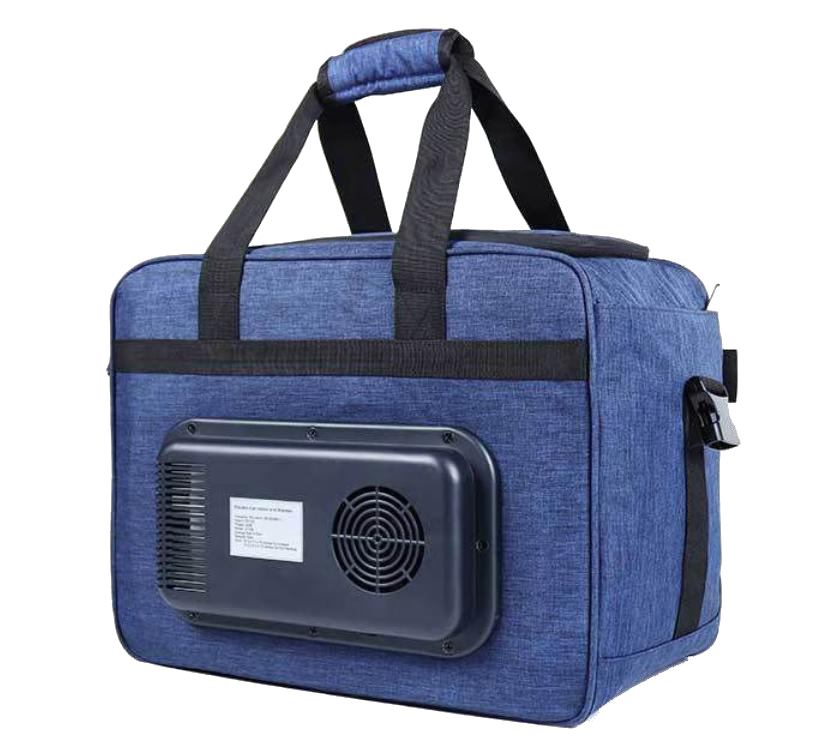
A soft cooler bag usually puts portability first: flexible walls, a zipper opening, handles or a strap, insulation and an external powered module. A rigid powered cooler box is a general market category with hard-sided construction. It may be evaluated for a different loading pattern, external protection, interior geometry and carrying routine.
Do not transfer evidence from one form to the other. The current thermoelectric bag category and its soft cooler and warmer bag document the bag direction only. They do not establish that Pertemba sells a rigid box.
02 / Interior planning
Usable capacity, dimensions, portability and loading pattern belong together
A single capacity figure cannot describe every use. A buyer also needs internal length, width and height, opening size, lining shape, the size of individual items, packing orientation and the amount of air space left around the load.
The current thermoelectric-bag source includes conflicting reference values, so this guide does not publish a capacity, weight or dimensional promise. Ask the supplier to confirm the exact model and measured usable interior for the approved configuration.
| Decision | Why it matters | Evidence to request |
|---|---|---|
| Usable interior | Nominal volume does not show whether the intended load fits. | Internal dimensions and a defined measuring method |
| Loading pattern | Bottles, meal packs and loose goods use space differently. | Load list, orientation and access routine |
| Portability | Carrying needs change with loaded weight and transfer distance. | Handle, strap, closure and handling review |
03 / Electrical package
Compare the 12V connector, vehicle power and power-consumption data as one package
A 12V cooler warmer label is only the start of a vehicle-use review. Confirm the connector, plug, cable length, vehicle outlet compatibility, input requirement, power-consumption data, controller, modes and supplied accessories for the exact model.
The electric cooler bag for car application guide helps turn those questions into a placement and trip brief. It does not replace model-level electrical confirmation.
04 / Comparable testing
Ambient temperature, starting condition, load and test duration change the result
Cooling or warming results mean little without the conditions that produced them. Ambient temperature sets the outside challenge. The starting state and amount of the load set what the product must manage. Opening the lid or bag changes the interior air, and a short observation may not describe a longer trip.
For the heat-transfer explanation behind this checklist, read how a thermoelectric cooler works. That guide explains the hot side, cold side, insulation and airflow that sit behind a fair test record.
Starting state
Record the condition of the product interior and the intended contents before power is applied.
Load and access
Define contents, amount, placement, opening frequency and the observation period.
Ambient and placement
Record the surrounding condition, vehicle position and available ventilation.
Measurement
Specify where readings are taken and which power and control setting is used.
05 / Operating questions
Cooling, warming, ventilation and noise questions need model-level answers
Thermoelectric systems move heat, so the hot side needs clear ventilation in either operating direction. Confirm the controls, mode indication and instructions for the selected product. Do not assume a generic cooler warmer has the same operating setup, noise behavior, accessories or evidence as another model.
Ask how the product should be placed, how clearance is defined, whether the fan or module can be obstructed, what conditions were used when sound was assessed and how the instructions address vehicle use. These are procurement questions, not promises of a fixed noise level or performance result.
06 / Decision record
Use one evidence checklist before comparing supplier claims
This checklist is the article's information gain: it lets a buyer compare claims without mistaking a category label or a broad reference value for product proof.
Fix the product identity.
Confirm the exact form, model, usable interior, dimensions, construction and included components.
Fix the power package.
Confirm connector, cable, input, vehicle compatibility, controller, modes and power-consumption data.
Request the test record.
Record ambient condition, starting state, load, duration, placement, ventilation, access routine and measurement points.
Match documents to the proposed claim.
Request model-level instructions and relevant product records that apply to the selected configuration and intended market wording.
Buyer FAQ
Questions before choosing a powered cooler container
Does Pertemba currently offer a rigid powered cooler box?
The current documented Pertemba evidence supports a soft thermoelectric cooler and warmer bag. This guide uses rigid powered cooler boxes as a general market comparison, not as a Pertemba product claim.
What capacity number should buyers compare?
Compare usable interior dimensions and the intended loading pattern for the exact model. Do not compare a nominal capacity number unless its definition and measurement basis are clear.
Is a 12V plug enough to compare two cooler warmers?
No. Confirm the connector, cable, vehicle compatibility, rated input, power-consumption data, supplied components and the operating conditions used for any performance statement.
What makes a supplier cooling or warming claim comparable?
The claim needs the exact product, ambient condition, starting load, load amount, duration, airflow setup, access routine, power input and measurement points behind it.
Continue the review
Compare the physical form, then test the exact configuration
The product, vehicle-use and working-principle pages each answer a different step in a sourced cooler-bag decision.
Prepare a comparable supplier brief
Discuss the product form, power package and test evidence your buyer team needs
Share the intended load, vehicle arrangement, preferred soft-bag features, operating routine and the data you need for sample comparison. Use the thermoelectric versus compressor cooler guide to keep the cooling mechanism separate from the container format.