Visibility mechanism guide
LED vs reflective vest: two visibility systems to verify separately
LED elements emit light from a powered system. Reflective material depends on external light returning toward a viewer. A vest may combine both, but neither feature alone proves a safety standard or model-level performance.
Direct answer
An LED vest creates a powered visible signal. A reflective vest becomes conspicuous when suitable external light reaches its reflective material and returns toward the observer. Combined products can use both mechanisms, but buyers must verify each function and the required compliance evidence independently.
01 / Emitted light
Active LED lighting creates its own visible signal
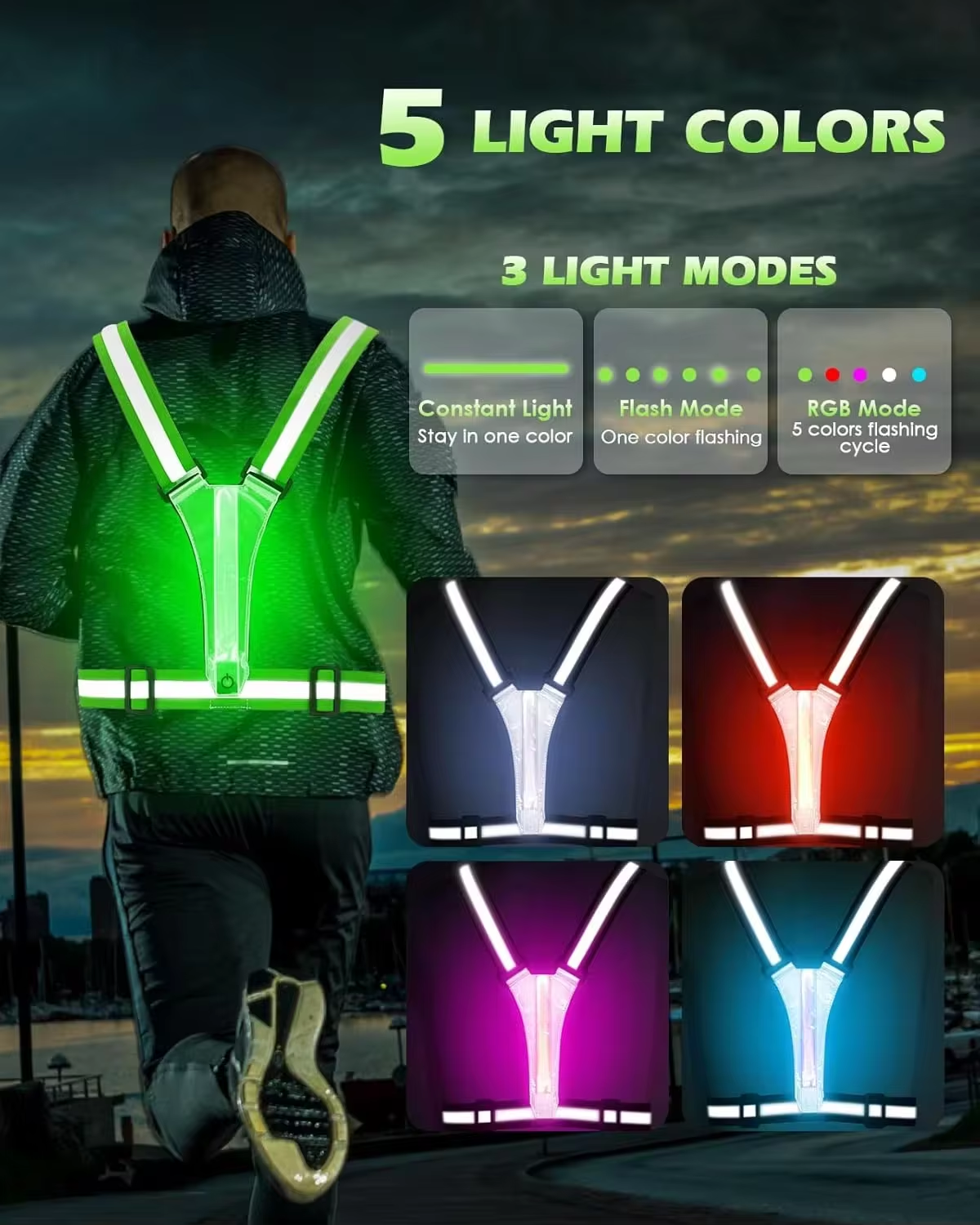
LED elements rely on a complete powered system: light placement, wiring, control, power source, connector or charging interface and garment integration. The buyer should map which viewing directions matter and review the illuminated sample from those directions during the intended motion.
Mode, brightness, runtime and weather statements cannot be transferred across products. They require the exact sample, power package and test conditions.
02 / Returned light
Reflective material depends on an external light source
Reflective material does not operate like a powered lamp. Its visible response depends on an external source, the angle between light, material and observer, the material layout, garment orientation and its condition after use and care.
A buyer should define front, side and rear viewing needs, then request material and garment evidence appropriate to the required market or work setting. A reflective-looking strip in a photograph is not enough to establish a standard.
03 / Dual mechanism
Combined LED and reflective structures can address different viewing conditions
Current LED safety apparel models show active light and reflective structures in the same vest. That combination may give buyers more layout options, but it does not turn two visible features into verified performance or compliance.
| Function | Depends on | Buyer checks |
|---|---|---|
| LED signal | Power, controls and light layout | Position, modes, viewing directions, charging and test conditions |
| Reflection | External light, angle and material condition | Placement, coverage, material evidence, care and required standard |
| Combined vest | Both systems plus stable garment fit | Separate acceptance criteria for light, reflection, power and garment |
Documented references include a USB rechargeable LED safety vest, a high-visibility LED cycling vest, a breathable reflective LED cycling vest and an LED reflective vest with ANSI Class 1 source wording. The last title is not published as verified certification.
04 / Operating system
Power placement, weather and garment care need model-level answers
Power placement
Check whether the power component remains secure and comfortable during running, cycling or work.
Charging and controls
Confirm interface, included parts, modes, indication, instructions and replacement workflow.
Weather exposure
Request evidence for the exact garment and electrical configuration before making weather-use claims.
Care
Define power removal, connector protection, cleaning, drying, storage and inspection.
The LED running and cycling vest application guide adds motion stability, posture, carried equipment and viewing-direction questions.
05 / Evidence boundary
Visibility features are not the same as standards compliance
LED light, reflective material and high-visibility color describe visible construction. They do not prove that a product meets a road, occupational or PPE standard. Supplier titles may contain standard wording, but Pertemba requires valid product-level evidence before repeating it as a verified claim.
Define the target market and intended claim first. Then verify the document issuer, product identity, standard and edition, tested construction, scope, validity and any labeling or user-instruction requirements.
06 / Claim review
Use an evidence checklist before making safety or performance claims
Define the environment and viewing directions.
Record activity, ambient light, external light sources, front-side-rear needs, layers and carried equipment.
Approve the visible layout.
Mark LED position, reflective coverage, garment color, closures and fit adjustment on the sample.
Fix the powered system.
Record source, controls, modes, connector, charging and the conditions behind performance data.
Match each public claim to evidence.
Keep brightness, visibility distance, runtime, weather and certification claims unpublished until the exact sample and supporting record agree.
Buyer FAQ
Questions about LED and reflective vests
What is the main difference between an LED vest and a reflective vest?
LED elements emit their own visible signal when powered, while reflective material returns light from an external source. Their layout, operating conditions and evidence should be reviewed separately.
Can an LED vest also use reflective material?
Yes. Current product references show combined structures, but the buyer should still specify and verify the LED and reflective functions independently.
Does an LED or reflective feature prove safety compliance?
No. Visible features and supplier-title wording do not establish compliance. The required standard, certificate scope, test report and exact product coverage must be verified for the target market.
What power information should buyers request for an LED vest?
Confirm the power source, battery inclusion, connector or charging interface, controls, modes, replacement process and the test conditions behind any runtime statement.
Apply the comparison
Move from visibility mechanism to a sample brief
Use the rechargeable LED vest buying guide to define activity, viewing directions, fit, charging, branding and evidence, then compare the current models.
Prepare a reviewable sample
Specify emitted light and reflected light separately
Share the activity, environment, viewing directions, fit, LED and reflective layout, power, branding, packaging and document needs.