B2B requirement guide
Rechargeable LED vest buying guide: build a reviewable brief
A useful buying brief defines the wearer, activity, viewing directions, powered light, reflective construction, fit, charging, branding, packaging and evidence before asking a supplier to confirm a sample.
Direct answer
Start with the activity and wearer. Then specify LED and reflective layouts, viewing directions, controls, power and charging, garment fit, branding and packaging. Finish with sample tests and the exact evidence required for every public claim.
01 / Use definition
Define the application environment and wearer profile first
A rechargeable LED vest for running, cycling, events or workplace review can face different motion, layers, approach directions and operating procedures. Record the task, ambient-light conditions, expected external light sources, front-side-rear viewing needs and how long the item is issued before charging.
Also record wearer measurements, seasonal clothing, posture, arm movement, carried equipment and who will inspect, charge, store and reissue the product. The LED running and cycling vest application guide turns those motion questions into a sample direction.
02 / Visible construction
Specify LED placement, modes and reflective-material requirements
Map the LED position from the viewing directions that matter. Then define reflective placement and garment color separately. The LED vs reflective vest comparison explains why emitted and reflected light need different acceptance criteria.
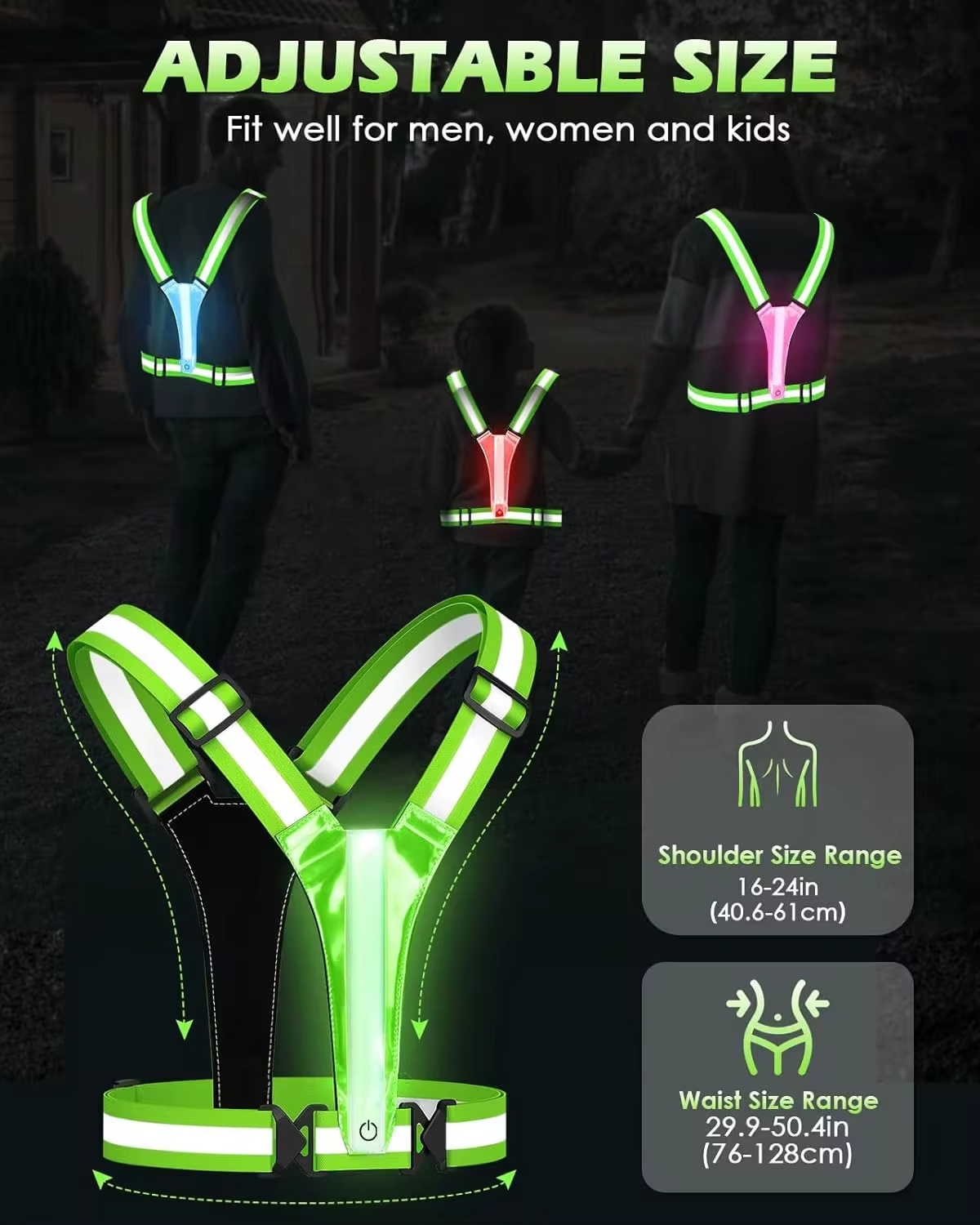
| Requirement | Questions to specify | Approval evidence |
|---|---|---|
| LED layout | Front, side, rear, spacing and control position | Illuminated sample views |
| Lighting modes | Available modes, switching sequence and indication | Approved operating instructions |
| Reflective structure | Material, width, coverage and target standard | Material or product-level report as required |
| Garment color | Color standard and contrast with light and branding | Color-approved sample |
03 / Electrical package
Request battery, charging, controls and runtime evidence together
Confirm whether the power source is built in, removable or supplied separately. Record charging interface, charger or cable inclusion, control operation, indication, storage, replacement and the workflow for a team or event program.
A runtime statement is only useful when it identifies the exact sample, light mode, power source, starting condition, ambient condition and test method. Do not use one product title or another model's data as a range-wide promise.
04 / Product program
Fit, adjustment, sizing, branding and packaging affect the system
Fit and adjustment
Approve stability in motion, size range, seasonal layers, closure and adjustment range.
Brand placement
Keep artwork clear of light, reflective coverage, controls, wiring, required labels and adjustment.
Trims and components
Confirm buckles, zippers, straps, pockets, control access and component retention.
Packaging
List included power parts, instructions, warnings, labels, unit pack, charging identification and cartons.
Use real references such as the USB high-visibility LED safety vest, high-visibility LED cycling vest, breathable reflective LED cycling vest and LED reflective vest with ANSI Class 1 source wording to select the closest construction. Keep all claims attached to each page's evidence.
05 / Sample review
Plan weather, care, durability and sample-test questions
Wear test.
Evaluate fit, adjustment, bounce, posture, carried equipment, control access and comfort with the intended layers.
Visibility review.
Check active light and reflection separately from the required viewing directions and external-light conditions.
Charging workflow.
Test issue, operation, charging, storage, inspection, replacement and instructions for the intended user group.
Care and exposure.
Confirm component protection, cleaning, drying and any weather or durability claim against the exact supporting evidence.
06 / Final requirement
Finish with standards, documents and a final requirement checklist
| Brief section | Required output |
|---|---|
| Application | Activity, environment, viewing directions, wearer and layers |
| Visible system | LED layout and modes, reflective coverage, garment color |
| Power | Source, charging, controls, included parts and runtime test condition |
| Garment program | Fit, sizes, adjustment, trims, branding, labels and packaging |
| Evidence | Care, weather, durability, target standard, report scope and claim wording |
Do not publish brightness, viewing distance, runtime, waterproof or certification language until the selected product and its supporting documents match the intended statement.
Buyer FAQ
Questions before requesting an LED vest sample
What should a rechargeable LED vest brief include?+−
Include the activity, low-light environment, viewing directions, wearer and layers, fit, LED and reflective layout, power and charging, branding, packaging, sample tests and required documents.
How should LED vest runtime be specified?+−
Do not set a universal runtime from a category claim. Request data for the exact sample, light mode, power source, ambient conditions and test method, then define the acceptance condition.
Can a custom logo be placed anywhere on an LED vest?+−
No placement should be assumed. Review the logo against visible light, reflective coverage, wiring, controls, adjustment, labels and any evidence-dependent construction.
What should be checked before calling an LED vest waterproof or certified?+−
Check the exact product, test report or certificate, scope, standard and edition, issuing body, validity, tested construction and intended public wording before publishing the claim.
Prepare the project
Connect the buying checklist to real models
Use the mechanism comparison for evidence boundaries, then compare current product references before fixing the sample brief.
Prepare a reviewable request
Turn the use case into an LED vest specification
Share activity, viewing directions, fit, light and reflective layout, charging, quantity, branding, packaging, tests and document needs.